

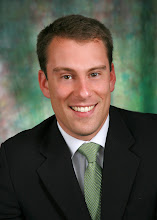
Dick Sloat for President
By Hans Zeiger
(A version of this article appeared in the Puyallup Herald on November 5, 2008)
If any young Puyallupan ever appeared destined for the White House, it was Richard O. Sloat. The born statesman from the Woodland area[1] could think, speak, and persuade better than anybody in town, and everybody liked him. Emphasizing his local renown, the Puyallup Valley Tribune once noted that he was “known to hundreds in the Valley as ‘Dick.’”[2] It would be about like saying “Abe” in Springfield, or “Teddy” in Manhattan, or “Ike” in Abilene. All anticipated the day when Dick would make Puyallup a household word in America.
With red, wavy hair like Thomas Jefferson and a million-dollar smile like Ronald Reagan, he shared the birth year of John F. Kennedy, 1918. He was slightly built. His eyes were alive with optimism.
“I think he would have to go down as one of the really outstanding students of Puyallup High School,” said his friend Frank Hanawalt, who was three years younger than Dick and thought of him as a role model. “He was almost like an inspiration to me. I often thought in my younger years that he was going places, that he might be a Senator or even more.”
In one sense, he was “even more.” When I called the old Marine Corps commanding officer who was with Dick when he was killed on the island of Saipan in 1944, the tribute was higher than the ones we accord to mere politicians. I only mentioned the name of Lt. Richard Sloat. “My God, my God,” replied Col. Ed Bale of New Mexico. “You raise the hair on the back of my neck, and I’m glad you did, because he was a fine, fine, fine man.”
In the battles of Tarawa and Saipan, Sloat was Bale’s executive officer in C Company, First Corps Medium Tank Battalion. To the men of C Company, Dick was known as “Red.” After he assigned Doug Crotts of North Carolina as his corporal at Camp Pendleton, California, Crotts formed the opinion that “Sloat was one of the nicest gentlemanly people I’ve ever known.”
Minus the southern drawl, Puyallup could say as much.
In high school, Dick was involved in drama and debate, but he was known to his peers in the Puyallup High School Class of 1936 and the surrounding classes as the preeminent student leader of their generation. Elected student body president in his senior year, he was a natural talent in school assemblies and speeches. “He could have been the yell leader as well,” said Hanawalt.
Frank’s father Paul Hanawalt was the superintendent of the school district. “I knew how much my parents admired him. I know that one of his great fans was the principal Harry Hanson, who just really enjoyed it when Dick was student body president.”
Dick’s classmate Ralph Smith recalled Dick’s charismatic presence at PHS during the Depression years. “He was a very outgoing guy,” said Smith, “very popular with everybody.”
Following high school graduation, Dick studied at the College of Puget Sound, where he excelled in theater and speech and debate competition. “He would think on his feet and speak extemporaneously without having notes or having to think ahead of time,” said Hanawalt, who matriculated at CPS in 1939 when Dick was in his senior year. By then, no surprise, Dick was president of the college’s student body.
Frank was also involved in speech and debate, and in his freshman year he competed in a campus speech competition on the question of permanent peace, less than two years before the Japanese attacks at Pearl Harbor. Since Dick had won the competition in 1939, he chaired the committee of three that awarded the prize in 1940. The prize went to Frank. What Frank especially remembers about winning that competition was that Dick approached him afterwards and “really congratulated me.”
Graduating from CPS with high honors, Dick took a job as a speech and drama teacher at Kelso High School in southwest Washington. He taught there for two years; he doubtless excelled at it.
When the war came, he volunteered in the Marine Corps. Following Officer Candidate School, Lt. Sloat was assigned as executive officer with the First Corps Tank Battalion’s C Company, in training at Camp Pendleton, California.[3] Each platoon had four tanks, and Lt. Sloat was the commander of his platoon’s lead tank, an M4A2 Sherman dubbed Cobra. There were four crewmen besides “Red”: Cpl. Buck Webb was the driver, Pfc. Jack Trent was the assistant driver, Pfc. Hank Trauernicht was the gunner, and Cpl. Bill Eads was the radioman.[4] Lt. Sloat earned both the respect and friendship of the company, but especially of the Cobra crew. “He was real easy to get along with,” said Cpl. Eads of Salinas, California. “Everybody liked him.”
On July 19, 1943, First Corps shipped out of San Diego aboard the sluggish U.S.S. Ashland, cruising 31 days to New Caledonia. There they drilled and waited for three months. In mid-November the tankers re-boarded the Ashland and joined an armada northward to the island of Tarawa.[5]
Puyallup paid a heavy price in the Battle of Tarawa. In the initial moments of the amphibious invasion on November 20, a 26-year old Pfc. named Johnny Holm, of 721 Stewart Street, was killed in the water. Then 27-year old Pfc. Carol Lundrigan, a 1934 graduate of Puyallup High School who was wounded a year earlier in the Battle of Guadalcanal, was struck down on the island.[6]
C Company loaded into landing crafts to join the third wave. Unable to traverse a reef hundreds of yards from a landing zone called Betio, the landing craft carrying Cobra deposited its tanks onto the reef. They plowed their way onto the beach, littered with the bodies of the first and second waves. And then they drove on through what Cpl. Eads describes as “random” shooting.[7]
Most of C Company’s fourteen tanks were disabled in the first day of the fight at Betio.[8] Cobra defied the odds and tracked to the edge of a Japanese airstrip by nightfall, where the crew rested.
Early on the second day, Cpl. Webb got under the tank through a trap door, probably to check up on a maintenance issue. A Japanese sniper was watching. Webb took a fatal bullet. As “Buck” lay dying in the Cobra, Lt. Sloat administered morphine.[9]
Pfc. Trent took over as driver. Through the morning and early afternoon, Cobra launched 75 mm shells at targets around the airstrip. Then Lt. Sloat received orders back to the beachhead at “Red Beach One” to take out a Japanese gun emplacement along the seawall. He directed the tank out along the carnage-laden beach and into shallow water to fire on the enemy.
As Cobra approached its line of fire, with the Japanese guns overhead training for an exchange, the Sherman suddenly tipped onto her side in a massive shell crater. Machine gun fire exploded from the seawall, but now water was seeping into the helpless tank and the crew compartment was filling up. The four Marines had no choice but to bail out through a rear hatch and slide into the water, hoping to evade the machine guns.[10]
Cpl. Eads described what happened next. “I had gotten out of the tank and was swimming towards an area that looked like it might be safe, and I got hit by a 50 caliber in the water. I think it was a 50 caliber—it was a big enough hole.” Trent was also wounded in the water, and he and Eads regrouped on the beach to locate a medic. They were evacuated to a hospital ship bound for Hawaii.
As for the red-headed lieutenant from Puyallup, he apparently made it to shore without a scratch. He survived Tarawa, and the battle concluded two days later.
Bill Eads tells me that the Cobra still sits in the haunted waters off Red Beach One. It bespeaks a parting too sudden. Next month I’ll write about Dick’s final acts of heroism on Saipan. That also, for his hometown, was a parting too sudden.
This election week, we could wonder what life would be like if Dick had come home. He might have figured prominently on the ballots of the twentieth century. But because of the price he paid—and the price that Johnny Holm and Carol Lundrigan and Buck Webb paid—we were able to cast our votes this week as citizens of a free country. We should never take that for granted around here.
Hans Zeiger is a fourth-generation Puyallup resident. He is collecting stories of Puyallup’s World War II veterans. Contact him at hanszeiger@yahoo.com or 253-905-8160.
[1] Interview with Gene Cotton, 19 Aug. 2008.
[2] “Lt. Sloat Killed on Saipan,” Puyallup Valley Tribune, 4 Aug. 1944
[3] Eric Hammel and John E. Lane, Bloody Tarawa: The Second Marine Division, November 20-23, 1943. (St. Paul, MN: Zenith Press, 2006), 264.
[4] Cobra, Tarawa on the Web, http://www.tarawaontheweb.org/cobra.htm, accessed 29 Oct. 2008.
[5] Interview with Doug Crotts, 19 Oct. 2008.
[6] Puyallup Valley Tribune, “Two Puyallup Boys Lost in South Pacific,” 31 Dec. 1943; interview with Bliss Lundrigan Welcker, 30 Aug. 2008.
[7] Cobra, Tarawa on the Web, http://www.tarawaontheweb.org/cobra.htm, accessed 29 Oct. 2008. “Cpl. William H. Eads, Jr.,” Tarawa on the Web, http://www.tarawaontheweb.org/billeads.htm, accessed 29 Oct. 2008. Interview with Bill Eads, 19 Oct. 2008.
[8] Cobra, Tarawa on the Web, http://www.tarawaontheweb.org/cobra.htm, accessed 29 Oct. 2008.
[9] Interview with Bill Eads, 19 Oct. 2008.
[10] “Cpl. William H. Eads, Jr.,” Tarawa on the Web, http://www.tarawaontheweb.org/billeads.htm, accessed 29 Oct. 2008. Interview with Bill Eads, 19 Oct. 2008.
Wednesday, November 5, 2008

Wednesday, October 1, 2008
The Aylen Legacy
The Aylen Legacy
By Hans Zeiger
(A version of this article appeared in the Puyallup Herald on October 1, 2008)
This week, Puyallup will dedicate Aylen Junior High School’s new campus. As an Aylen alumnus, I take some pride in the event. We should also celebrate the man for whom the school is named. Dr. Charles H. Aylen leaves a legacy in Puyallup of service in health care and education.
Charles Aylen was born near Mandan, North Dakota in 1889, the year that his birth state and his adopted state both entered the union. He grew up on the frigid buffalo plains where the Missouri River forms the Heart Tributary.
Aylen studied medicine at the University of Manitoba in Winnipeg, earning his doctorate just as Canada entered the World War in 1914. He joined the Canadian Army as a physician in the medical corps. While serving in a British military hospital, he fell in love with a young nurse named Beatrice.
Dr. Aylen returned to Mandan with a German sword, a French 75 mm field gun, and a British infantry helmet. Many years later, Dr. Aylen enthusiastically donated these relics of the First World War to Puyallup’s scrap drive of the Second World War. Such things were expendable compared to the real treasure of Dr. Aylen’s war years—Beatrice—who soon made her way to North Dakota for the wedding.
Dissatisfied by the plains, Dr. Aylen and his new bride set off for the Pacific Northwest. They settled in Puyallup in 1919, and soon Dr. Aylen partnered with Shirley Berry to begin a small clinic in a private house in Sumner. It was Dr. Berry who established the Puyallup Valley Hospital at Meridian and Fourth Avenue Northwest in 1922. Along with Dr. Charles Morse, Dr. Berry and Dr. Aylen comprised the medical staff of the new hospital. The doctors’ offices were on the ground floor, and the hospital rooms were on the second floor.
In the decades to come, Dr. Aylen delivered thousands of Puyallup’s babies and cared for them as they grew. As a father himself, Dr. Aylen took increasing interest in the quality of life of Puyallup’s young. He served two terms on the Puyallup School Board in the 1930s and 1940s, working closely with the legendary superintendent Paul Hanawalt.
Dr. Aylen retired in the late 1940s. The following decade, a management change at Puyallup General Hospital turned it into Good Samaritan Hospital. The Aylens spent part of their retirement years in La Hoya, California.
I visited with Dr. Aylen’s son Bob several months ago. Bob and his wife June still live in the community, and they attend monthly reunions of the Puyallup High School Class of 1939. Dr. Robert Aylen worked for decades as a dentist in Puyallup, himself serving two terms on the Puyallup School Board in the 1960s alongside another junior high school namesake, Dr. Vitt Ferrucci.
Also like his father, Bob Aylen is a veteran of a world war, having flown B-26s in Army Air Corps training programs. He spent the early part of the war working in the Tacoma shipyards. He studied dentistry at the University of Washington and began his practice above the Rose Restaurant in 1950. Later, he and Ransom Convis opened a dentist office next door to the Meeker Mansion, where they expanded their partnership to include John Parrish. Bob Aylen spent forty years practicing in Puyallup, retiring from the dental profession at the age of seventy.
Charles Aylen and Bob Aylen stand out among the “generous people” who have served in our community. They answered the call to serve in times of war. They came home and devoted their lives to the health of Puyallup. They championed local education as members of the school board.
In a yearbook message to Bob’s graduating class of 1939, Charles Aylen quoted the Roman emperor Marcus Aurelius: “We are made for cooperation,” he wrote. Perhaps recalling his own experience at war, and aware that portents of war were growing once again in the world, he wrote, “Yet in spite of all our advance in science and the arts, nations and races have not learned to cooperate. Therein lies the greatest challenge to education. If we can, through education, bring about a deep and lasting cooperation between all peoples of the earth, that will, in the truest sense of the word, be progress.”
It was through education, Charles Aylen believed, that human beings could learn to put aside their differences and find common purpose. He dedicated himself to that idea and died in 1981 at the age of 91, having lived to see Puyallup’s junior high school dedicated in his name.
Hans Zeiger is an Aylen Junior High School alumnus and a fourth generation Puyallup resident. He is collecting stories about Puyallup during World War II, and can be reached at hanszeiger@yahoo.com or 253-905-8160.
By Hans Zeiger
(A version of this article appeared in the Puyallup Herald on October 1, 2008)
This week, Puyallup will dedicate Aylen Junior High School’s new campus. As an Aylen alumnus, I take some pride in the event. We should also celebrate the man for whom the school is named. Dr. Charles H. Aylen leaves a legacy in Puyallup of service in health care and education.
Charles Aylen was born near Mandan, North Dakota in 1889, the year that his birth state and his adopted state both entered the union. He grew up on the frigid buffalo plains where the Missouri River forms the Heart Tributary.
Aylen studied medicine at the University of Manitoba in Winnipeg, earning his doctorate just as Canada entered the World War in 1914. He joined the Canadian Army as a physician in the medical corps. While serving in a British military hospital, he fell in love with a young nurse named Beatrice.
Dr. Aylen returned to Mandan with a German sword, a French 75 mm field gun, and a British infantry helmet. Many years later, Dr. Aylen enthusiastically donated these relics of the First World War to Puyallup’s scrap drive of the Second World War. Such things were expendable compared to the real treasure of Dr. Aylen’s war years—Beatrice—who soon made her way to North Dakota for the wedding.
Dissatisfied by the plains, Dr. Aylen and his new bride set off for the Pacific Northwest. They settled in Puyallup in 1919, and soon Dr. Aylen partnered with Shirley Berry to begin a small clinic in a private house in Sumner. It was Dr. Berry who established the Puyallup Valley Hospital at Meridian and Fourth Avenue Northwest in 1922. Along with Dr. Charles Morse, Dr. Berry and Dr. Aylen comprised the medical staff of the new hospital. The doctors’ offices were on the ground floor, and the hospital rooms were on the second floor.
In the decades to come, Dr. Aylen delivered thousands of Puyallup’s babies and cared for them as they grew. As a father himself, Dr. Aylen took increasing interest in the quality of life of Puyallup’s young. He served two terms on the Puyallup School Board in the 1930s and 1940s, working closely with the legendary superintendent Paul Hanawalt.
Dr. Aylen retired in the late 1940s. The following decade, a management change at Puyallup General Hospital turned it into Good Samaritan Hospital. The Aylens spent part of their retirement years in La Hoya, California.
I visited with Dr. Aylen’s son Bob several months ago. Bob and his wife June still live in the community, and they attend monthly reunions of the Puyallup High School Class of 1939. Dr. Robert Aylen worked for decades as a dentist in Puyallup, himself serving two terms on the Puyallup School Board in the 1960s alongside another junior high school namesake, Dr. Vitt Ferrucci.
Also like his father, Bob Aylen is a veteran of a world war, having flown B-26s in Army Air Corps training programs. He spent the early part of the war working in the Tacoma shipyards. He studied dentistry at the University of Washington and began his practice above the Rose Restaurant in 1950. Later, he and Ransom Convis opened a dentist office next door to the Meeker Mansion, where they expanded their partnership to include John Parrish. Bob Aylen spent forty years practicing in Puyallup, retiring from the dental profession at the age of seventy.
Charles Aylen and Bob Aylen stand out among the “generous people” who have served in our community. They answered the call to serve in times of war. They came home and devoted their lives to the health of Puyallup. They championed local education as members of the school board.
In a yearbook message to Bob’s graduating class of 1939, Charles Aylen quoted the Roman emperor Marcus Aurelius: “We are made for cooperation,” he wrote. Perhaps recalling his own experience at war, and aware that portents of war were growing once again in the world, he wrote, “Yet in spite of all our advance in science and the arts, nations and races have not learned to cooperate. Therein lies the greatest challenge to education. If we can, through education, bring about a deep and lasting cooperation between all peoples of the earth, that will, in the truest sense of the word, be progress.”
It was through education, Charles Aylen believed, that human beings could learn to put aside their differences and find common purpose. He dedicated himself to that idea and died in 1981 at the age of 91, having lived to see Puyallup’s junior high school dedicated in his name.
Hans Zeiger is an Aylen Junior High School alumnus and a fourth generation Puyallup resident. He is collecting stories about Puyallup during World War II, and can be reached at hanszeiger@yahoo.com or 253-905-8160.
Remember Eddie Myers
Remember Eddie Myers
By Hans Zeiger
(Adapted versions of this story appeared in the Puyallup Herald on Sept. 3 and Oct. 1, 2008)
At the Veteran’s Memorial in Pioneer Park, the list of Puyallup’s lost men from World War II numbers fifty. Particular memories of the men persist only in the minds of a few old friends—now eighty-five and ninety years old—who played with them on the football team at Viking Field, who picked blackberries with them in the valley summers, or who fished with them along the River as it flowed on like time. These old friends, like everyone in their generation, made their own sacrifices to preserve freedom.
I have gone to them these past few months to ask some questions. I have asked about their service to the country, and then about their outstanding contributions to the community over the years, and then about their memories of Puyallup’s war dead. Great themes and insights have developed in the course of the interviews.
While some of the fifty names on the Veterans’ Memorial remain mysteries, there is one hero who is remembered well, and beloved in memory, by most of the men and women I interview.
He was Eddie Myers—or as his friends at war would come to know him, Eddie Myers of Puyallup, Washington.
That is how Lt. Howard Randall of Texas knew Lt. Myers. Several years ago, Randall traveled with Bill Moyers of PBS to visit Eddie’s grave in a Luxembourg cemetery, the same cemetery in which General George Patton is buried. In front of Eddie’s white cross, Randall wept as he told of the man he and many others came to love. Few other comrades have made the trip to see Eddie Myers’ marker. As Randall told me, “Most of the people who knew Eddie were killed.” It says something about the kind of war Eddie Myers fought in, that few of Eddie’s men survived to tell us how he died. Some friends from home remain to tell us how he lived.
Eddie Myers grew up on the grounds of the Washington State College Experimental Station, where his father worked as the foreman. His mother had two daughters from a previous marriage, one who was much older and the other, Marian, who was five or six years older than Eddie. Next door to the Myerses were the Kinseys. Essey Kinsey and Eddie were the same age, so they grew up together. Since there were no boys in the Kinsey family, Essey recalls, “Eddie was like a brother.” In the evenings after school at Maplewood Elementary, Essey and Eddie, along with Ruthie and Bobby Bigelow and a few other neighborhood kids, played games in the fields.
In the summers, Eddie went to YMCA camp on an island in Lake Tapps, in the days before Lake Tapps was surrounded by homes. In his first year at camp, Eddie was assigned to the same cabin with Frank Hanawalt and six others who were all slightly older. Despite Eddie’s junior status, Hanawalt recalls, “He was the person that added life to our cabin. He was so funny.”
A few years later, Hanawalt would sit in the stands at Viking Field, surrounded by his classmates and most of the town, as Eddie Myers grabbed hold of the punts from fourth down. “I remember the determination with which he would grab that punt and tuck it away and take off.” Eddie was only 145 pounds, but as his teammate and friend Don Henderson recalls, “He wasn’t afraid of anything. Eddie Myers was fearless.”
Most mornings, Eddie walked along Pioneer to Puyallup High School, and most afternoons he walked home. On the mornings when Eddie didn’t walk, he and Essey met at the bus stop and sat together on the ride up Pioneer to the high school. Essey and Eddie shared their deepest secrets and consulted each other about their boyfriends and girlfriends. After school and sports, one might have gone to see the other, to chat about Eddie’s upcoming student government election, or to review the day’s game.
Eddie and Don Henderson worked part-time together at the Experimental Station. As Henderson recalls, “On Friday after everybody went home, Eddie’s job and my job was to make sure all the equipment had gas in it. He’d drive his dad’s car down there, and I had a Model A Ford, and we used to park behind one of the barns, and each one of our cars held 10 gallons of gas. So we’d get these and fill them up between us. Gas was about 17 cents at that time.”
One thing Essey and Eddie didn’t speak about was their future careers. Rarely did they speculate about college or other aspirations beyond their small-town world. The simple pleasures of living in the present—with the work at hand, school activities, good friends—that was enough for an interesting life on the daffodil frontier. Others saw the star potential in Eddie Myers. The Puyallup High School Class of 1940 elected Eddie its president. “Eddie was just a remarkable guy. You couldn’t find a better guy than that,” said his classmate Manford Hogman.
“He was just a natural, I guess,” then adding, with a chuckle, “He probably would have been president.”
Eddie Myers wasn’t a genius. He repeated the First Grade at Maplewood. Randall recalls that he was “not very sophisticated.” But he was brimming with character. He was charming as well as gregarious. When Hogman moved with his family from Illinois to join the Puyallup Class of 1940 in its sophomore year, it was Eddie, along with Ray Glaser (later to die in a wartime plane crash) and Glenn Todd, who made him feel welcome. The Class voted Eddie “Friendliest Guy” (Essey was “Friendliest Girl”). And above all, he was, like the town he loved, generous.
Though the Myers family never owned pets, Eddie came to love the animals around the Experimental Station. From the time he could walk out into the pasture or explore the barns, he had grown up with them. As a teenager working at the station, he most liked to care for the cows and chickens and the other creatures.
And so it is unimaginable that Eddie Myers went to war to kill. Like his quiet friend and neighbor Bobby Bigelow, a medic who was shot and killed in the Philippines while helping a wounded comrade, Eddie went to war to save life.
As captain of the Puyallup High School football team, Eddie Myers led the Vikings against the Spartans. Those who saw him run the ball down Viking Field in those late years of the Thirties could just feel his awesome determination. He seemed the very embodiment of Puyallup—spirited, friendly, generous. But those weren’t Eddie’s finest moments. It’s when he took on Nazi Germany and gave everything for his country that Eddie Myers was at his best.
Eddie was a few years into his education at Washington State College when he left for the Army. He began officer training in 1943, moving on for infantry training at Fort Benning, Georgia. Eddie was a natural leader, and he personified the motto of the infantry—“Follow me.” Assigned to the 417th Infantry Regiment, 76th Division, Lt. Myers met up with his men at Camp McCoy, Wisconsin. He was made a rifle platoon leader, which meant that he led a rifle squad of nine men, alongside two other rifle squads and a weapons squad. Through the spring and summer and into the fall of 1944, the 417th trained for the liberation of Europe.
Lt. Randall joined the 76th as a rifle platoon leader in June. Since he was new to the platoon, he was at a disadvantage in relating to the men, but he quickly observed that Lt. Myers had won them over. Eddie made himself available to the GIs to assist them with personal troubles or to reassure them about the stresses of war. As he had done on the island in Lake Tapps, he made camp life humane. He was a counselor and friend. Some men in the platoon were illiterate, so Eddie took time to transcribe their letters home. “He was better than the rest of us lieutenants,” said Randall. “The rest of us went to town and had beers. Whenever we went into town he stayed back with his platoon.”
On Thanksgiving Day, 1944, the 76th boarded the troop transport USS Brazil out of Boston. The ship docked at Southampton a week and a half later, then the 76th marched through the New Forest to Bournemouth on the southern coast. As Christmas approached, Eddie was like a father, helping the illiterate men to write letters home and entertaining them with his wit. As at Camp McCoy, there were opportunities to go out with the officers. But as Randall recalls, “Even when some regimental girls in England put on a dance, he stayed back.”
Just before Christmas, the troops at Bournemouth learned that the Germans had gone back on the offensive at the Ardennes Forest on the Western Front. The 76th was ordered to meet up with General Patton’s Third Army as it fought to keep its ground. They would rendezvous in Luxembourg, between France and Germany.
Christmas Day in camp was sad. The 2,500 men of the 66th Infantry Division shipped out for France on Christmas Eve aboard a Belgian cruise ship, the SS Leopoldville. Just a few miles from the coast of Cherbourg, a German U-boat torpedoed the Leopoldville, killing 802. Tom Kordle wrote a poem to memorialize a friend who was lost that night: “December Channel, dark and cruel / Coffin on that mournful Yule.”[1]
It was the middle of January when the 76th embarked for France in armada. Snow was falling on Bournemouth as a hundred troop transports pushed out. The boats plied the waves at about 11 knots per hour because of the U-boat danger.
Across the channel, the 76th marched from Limesy to Luxembourg in less than two weeks through the snow, arriving in Junglinster on January 26.[2] Even without the impending crossfire, the winter was deadly. Snow blanketed the disputed lands. Inadequately booted and clothed, the men struggled to survive.
In the Luxembourg winter of 1945, Lt. Myers was almost, as his football teammate Don Henderson had known him at Viking Field in the good years, “fearless.” But as Randall remembers, “We were all afraid that we were going to get killed or wounded in combat. After seeing the figures from Omaha Beach, we knew that it was pretty bad. We also knew that their tanks were better, and their 88-mm gun was better. They were a veteran-trained army, most had been fighting for five or six years, and we were brand new. We hadn’t been in combat at all.”
Infantrymen were a minority of servicemen and a majority of casualties. According to General Omar Bradley, only one in fifteen men in the European theater were in combat, and only one in seven in the Third Army. “There’s so many people in supply and support that don’t ever have to fight,” said Randall. “The infantry rifle company is where attrition is so terrible.” The rifle infantry accounted for 83 percent of casualties.
By war’s end, three of six officers in Eddie’s company had been killed. The other three were wounded. One wounded officer became mentally unstable.
“The life expectancy of a Second Lieutenant in the infantry was pretty terrible,” said Randall.
“We all welcomed a light wound—that was the greatest way to get out of fighting. You just didn’t want a severe wound.”
The first officer in Eddie’s company to be severely wounded in the Battle of the Bulge was the company commander. Then the executive officer was killed. With no time to mourn the dead, Eddie took over as company commander.
In mid-February, several hundred men of the 76th penetrated the Ziegfried Line. They crossed the Zauer River through German-occupied territory. On the other side, Lt. Myers led his men as they climbed about 450 feet up a mine-laden escarpment. At the top was an obstacle course like no other. Stretching 1,000 yards across and three and a half miles into the distance were 144 German pillboxes. Inch by inch, pillbox by pillbox, the infantrymen made their way through. Despite their insufficient clothing and shoes, the 76th had a fighting advantage over the Germans, whose force had been weakened by Russian assaults on the Eastern front.
“That was Eddie’s biggest action,” said Randall. “We went through that. Then after a couple days he got killed.”
It was after two days of rest beyond the Ziegfried line that the 76th began an assault on the town of Welshbillag. Two-hundred fifty men charged into the town.
Two German tanks fired rounds of 80-mm mortars into the advancing Americans. Some men were killed instantly. A shell landed beside Lt. Randall; it was a dud. Lt. Myers was hit in the stomach. He was losing blood quickly. Some of his men helped him into a barn. Most of the platoon continued on, fighting through the night. Lt. Myers sat up in the barn in agonizing pain.
Probably there were animals in the barn where Lt. Myers died, so at least in the end, he was with creatures he loved. Eddie was 21.
“I can understand him getting killed, because if the guy next to him didn’t want to go, he’d be out there,” said Eddie’s friend Don Henderson.
Lt. Eddie Myers ought to be a hero to the young people of Puyallup. He is a hero to its old people. He is by now a hero to me.
Hans Zeiger is a fourth-generation Puyallup resident and a freelance writer. He is seeking additional memories of Eddie Myers and other Puyallup war heroes. Contact him at hanszeiger@yahoo.com or 253-905-8160.
[1] http://www.skylighters.org/milxmas/2000.html
[2] http://www.history.army.mil/documents/eto-ob/76ID-ETO.htm
By Hans Zeiger
(Adapted versions of this story appeared in the Puyallup Herald on Sept. 3 and Oct. 1, 2008)
At the Veteran’s Memorial in Pioneer Park, the list of Puyallup’s lost men from World War II numbers fifty. Particular memories of the men persist only in the minds of a few old friends—now eighty-five and ninety years old—who played with them on the football team at Viking Field, who picked blackberries with them in the valley summers, or who fished with them along the River as it flowed on like time. These old friends, like everyone in their generation, made their own sacrifices to preserve freedom.
I have gone to them these past few months to ask some questions. I have asked about their service to the country, and then about their outstanding contributions to the community over the years, and then about their memories of Puyallup’s war dead. Great themes and insights have developed in the course of the interviews.
While some of the fifty names on the Veterans’ Memorial remain mysteries, there is one hero who is remembered well, and beloved in memory, by most of the men and women I interview.
He was Eddie Myers—or as his friends at war would come to know him, Eddie Myers of Puyallup, Washington.
That is how Lt. Howard Randall of Texas knew Lt. Myers. Several years ago, Randall traveled with Bill Moyers of PBS to visit Eddie’s grave in a Luxembourg cemetery, the same cemetery in which General George Patton is buried. In front of Eddie’s white cross, Randall wept as he told of the man he and many others came to love. Few other comrades have made the trip to see Eddie Myers’ marker. As Randall told me, “Most of the people who knew Eddie were killed.” It says something about the kind of war Eddie Myers fought in, that few of Eddie’s men survived to tell us how he died. Some friends from home remain to tell us how he lived.
Eddie Myers grew up on the grounds of the Washington State College Experimental Station, where his father worked as the foreman. His mother had two daughters from a previous marriage, one who was much older and the other, Marian, who was five or six years older than Eddie. Next door to the Myerses were the Kinseys. Essey Kinsey and Eddie were the same age, so they grew up together. Since there were no boys in the Kinsey family, Essey recalls, “Eddie was like a brother.” In the evenings after school at Maplewood Elementary, Essey and Eddie, along with Ruthie and Bobby Bigelow and a few other neighborhood kids, played games in the fields.
In the summers, Eddie went to YMCA camp on an island in Lake Tapps, in the days before Lake Tapps was surrounded by homes. In his first year at camp, Eddie was assigned to the same cabin with Frank Hanawalt and six others who were all slightly older. Despite Eddie’s junior status, Hanawalt recalls, “He was the person that added life to our cabin. He was so funny.”
A few years later, Hanawalt would sit in the stands at Viking Field, surrounded by his classmates and most of the town, as Eddie Myers grabbed hold of the punts from fourth down. “I remember the determination with which he would grab that punt and tuck it away and take off.” Eddie was only 145 pounds, but as his teammate and friend Don Henderson recalls, “He wasn’t afraid of anything. Eddie Myers was fearless.”
Most mornings, Eddie walked along Pioneer to Puyallup High School, and most afternoons he walked home. On the mornings when Eddie didn’t walk, he and Essey met at the bus stop and sat together on the ride up Pioneer to the high school. Essey and Eddie shared their deepest secrets and consulted each other about their boyfriends and girlfriends. After school and sports, one might have gone to see the other, to chat about Eddie’s upcoming student government election, or to review the day’s game.
Eddie and Don Henderson worked part-time together at the Experimental Station. As Henderson recalls, “On Friday after everybody went home, Eddie’s job and my job was to make sure all the equipment had gas in it. He’d drive his dad’s car down there, and I had a Model A Ford, and we used to park behind one of the barns, and each one of our cars held 10 gallons of gas. So we’d get these and fill them up between us. Gas was about 17 cents at that time.”
One thing Essey and Eddie didn’t speak about was their future careers. Rarely did they speculate about college or other aspirations beyond their small-town world. The simple pleasures of living in the present—with the work at hand, school activities, good friends—that was enough for an interesting life on the daffodil frontier. Others saw the star potential in Eddie Myers. The Puyallup High School Class of 1940 elected Eddie its president. “Eddie was just a remarkable guy. You couldn’t find a better guy than that,” said his classmate Manford Hogman.
“He was just a natural, I guess,” then adding, with a chuckle, “He probably would have been president.”
Eddie Myers wasn’t a genius. He repeated the First Grade at Maplewood. Randall recalls that he was “not very sophisticated.” But he was brimming with character. He was charming as well as gregarious. When Hogman moved with his family from Illinois to join the Puyallup Class of 1940 in its sophomore year, it was Eddie, along with Ray Glaser (later to die in a wartime plane crash) and Glenn Todd, who made him feel welcome. The Class voted Eddie “Friendliest Guy” (Essey was “Friendliest Girl”). And above all, he was, like the town he loved, generous.
Though the Myers family never owned pets, Eddie came to love the animals around the Experimental Station. From the time he could walk out into the pasture or explore the barns, he had grown up with them. As a teenager working at the station, he most liked to care for the cows and chickens and the other creatures.
And so it is unimaginable that Eddie Myers went to war to kill. Like his quiet friend and neighbor Bobby Bigelow, a medic who was shot and killed in the Philippines while helping a wounded comrade, Eddie went to war to save life.
As captain of the Puyallup High School football team, Eddie Myers led the Vikings against the Spartans. Those who saw him run the ball down Viking Field in those late years of the Thirties could just feel his awesome determination. He seemed the very embodiment of Puyallup—spirited, friendly, generous. But those weren’t Eddie’s finest moments. It’s when he took on Nazi Germany and gave everything for his country that Eddie Myers was at his best.
Eddie was a few years into his education at Washington State College when he left for the Army. He began officer training in 1943, moving on for infantry training at Fort Benning, Georgia. Eddie was a natural leader, and he personified the motto of the infantry—“Follow me.” Assigned to the 417th Infantry Regiment, 76th Division, Lt. Myers met up with his men at Camp McCoy, Wisconsin. He was made a rifle platoon leader, which meant that he led a rifle squad of nine men, alongside two other rifle squads and a weapons squad. Through the spring and summer and into the fall of 1944, the 417th trained for the liberation of Europe.
Lt. Randall joined the 76th as a rifle platoon leader in June. Since he was new to the platoon, he was at a disadvantage in relating to the men, but he quickly observed that Lt. Myers had won them over. Eddie made himself available to the GIs to assist them with personal troubles or to reassure them about the stresses of war. As he had done on the island in Lake Tapps, he made camp life humane. He was a counselor and friend. Some men in the platoon were illiterate, so Eddie took time to transcribe their letters home. “He was better than the rest of us lieutenants,” said Randall. “The rest of us went to town and had beers. Whenever we went into town he stayed back with his platoon.”
On Thanksgiving Day, 1944, the 76th boarded the troop transport USS Brazil out of Boston. The ship docked at Southampton a week and a half later, then the 76th marched through the New Forest to Bournemouth on the southern coast. As Christmas approached, Eddie was like a father, helping the illiterate men to write letters home and entertaining them with his wit. As at Camp McCoy, there were opportunities to go out with the officers. But as Randall recalls, “Even when some regimental girls in England put on a dance, he stayed back.”
Just before Christmas, the troops at Bournemouth learned that the Germans had gone back on the offensive at the Ardennes Forest on the Western Front. The 76th was ordered to meet up with General Patton’s Third Army as it fought to keep its ground. They would rendezvous in Luxembourg, between France and Germany.
Christmas Day in camp was sad. The 2,500 men of the 66th Infantry Division shipped out for France on Christmas Eve aboard a Belgian cruise ship, the SS Leopoldville. Just a few miles from the coast of Cherbourg, a German U-boat torpedoed the Leopoldville, killing 802. Tom Kordle wrote a poem to memorialize a friend who was lost that night: “December Channel, dark and cruel / Coffin on that mournful Yule.”[1]
It was the middle of January when the 76th embarked for France in armada. Snow was falling on Bournemouth as a hundred troop transports pushed out. The boats plied the waves at about 11 knots per hour because of the U-boat danger.
Across the channel, the 76th marched from Limesy to Luxembourg in less than two weeks through the snow, arriving in Junglinster on January 26.[2] Even without the impending crossfire, the winter was deadly. Snow blanketed the disputed lands. Inadequately booted and clothed, the men struggled to survive.
In the Luxembourg winter of 1945, Lt. Myers was almost, as his football teammate Don Henderson had known him at Viking Field in the good years, “fearless.” But as Randall remembers, “We were all afraid that we were going to get killed or wounded in combat. After seeing the figures from Omaha Beach, we knew that it was pretty bad. We also knew that their tanks were better, and their 88-mm gun was better. They were a veteran-trained army, most had been fighting for five or six years, and we were brand new. We hadn’t been in combat at all.”
Infantrymen were a minority of servicemen and a majority of casualties. According to General Omar Bradley, only one in fifteen men in the European theater were in combat, and only one in seven in the Third Army. “There’s so many people in supply and support that don’t ever have to fight,” said Randall. “The infantry rifle company is where attrition is so terrible.” The rifle infantry accounted for 83 percent of casualties.
By war’s end, three of six officers in Eddie’s company had been killed. The other three were wounded. One wounded officer became mentally unstable.
“The life expectancy of a Second Lieutenant in the infantry was pretty terrible,” said Randall.
“We all welcomed a light wound—that was the greatest way to get out of fighting. You just didn’t want a severe wound.”
The first officer in Eddie’s company to be severely wounded in the Battle of the Bulge was the company commander. Then the executive officer was killed. With no time to mourn the dead, Eddie took over as company commander.
In mid-February, several hundred men of the 76th penetrated the Ziegfried Line. They crossed the Zauer River through German-occupied territory. On the other side, Lt. Myers led his men as they climbed about 450 feet up a mine-laden escarpment. At the top was an obstacle course like no other. Stretching 1,000 yards across and three and a half miles into the distance were 144 German pillboxes. Inch by inch, pillbox by pillbox, the infantrymen made their way through. Despite their insufficient clothing and shoes, the 76th had a fighting advantage over the Germans, whose force had been weakened by Russian assaults on the Eastern front.
“That was Eddie’s biggest action,” said Randall. “We went through that. Then after a couple days he got killed.”
It was after two days of rest beyond the Ziegfried line that the 76th began an assault on the town of Welshbillag. Two-hundred fifty men charged into the town.
Two German tanks fired rounds of 80-mm mortars into the advancing Americans. Some men were killed instantly. A shell landed beside Lt. Randall; it was a dud. Lt. Myers was hit in the stomach. He was losing blood quickly. Some of his men helped him into a barn. Most of the platoon continued on, fighting through the night. Lt. Myers sat up in the barn in agonizing pain.
Probably there were animals in the barn where Lt. Myers died, so at least in the end, he was with creatures he loved. Eddie was 21.
“I can understand him getting killed, because if the guy next to him didn’t want to go, he’d be out there,” said Eddie’s friend Don Henderson.
Lt. Eddie Myers ought to be a hero to the young people of Puyallup. He is a hero to its old people. He is by now a hero to me.
Hans Zeiger is a fourth-generation Puyallup resident and a freelance writer. He is seeking additional memories of Eddie Myers and other Puyallup war heroes. Contact him at hanszeiger@yahoo.com or 253-905-8160.
[1] http://www.skylighters.org/milxmas/2000.html
[2] http://www.history.army.mil/documents/eto-ob/76ID-ETO.htm
Wednesday, July 2, 2008
"To Baby Sparky": July 4, 1944
“To Baby Sparky”
By Hans Zeiger
Appeared in the Puyallup Herald on July 2, 2008
Just before the first birds of morning began to sing on the Fourth of July, 1944, Dorothy Gamaunt knew that it was time. She awakened her father to drive her to the hospital. The normally steady Mr. Martin, owner of Martin’s Confectionary downtown, was nervous as he got into the car, and he flooded the engine. Frantically, he sprang out into the dewy morning air and rapped on the neighbor’s door. It opened; keys were quickly handed over; Dorothy moved from one car to the next. The car wouldn’t start. Mr. Martin turned to his daughter beside him with the gravest expression on his face. “Honey,” he asked, “are you sure you want to go through with this?”
After the engine flood subsided, it was Mr. Martin’s own car that brought Dorothy and her offspring to the hospital downtown, where Dr. Charles Aylen delivered Leon Gamaunt III.
Before the measurements could be taken, Grandpa Martin was out at the train depot, not far from the hospital. He walked into the telegraph office and stated his purpose. The telegraph man returned a slip that included spaces for “name,” “weight,” and “height”—none of which Mr. Martin had. So the message to Puyallup’s newest father was, “Mother and son both fine.”
In the afternoon heat of the North African desert, Baby Leon’s namesake was sitting in the airfield barracks when the telegram arrived. Leon Gamaunt was a mechanic in the Army Air Corps. An enthusiastic messenger ran in with the news. “You have a son! It’s a boy!” he shouted.
When word spread through town of the Martins’ new grandson, Mr. and Mrs. Olaf Kniffen, of Kniffen’s Bakery, sent a gift to the Martin residence. It was a romper suit, but the important thing was the card that was attached. “To Baby Sparky,” it read, for little Leon had come in time to celebrate America’s independence in a year when the reasons for celebration were especially evident. The nickname stuck.
Baby Sparky’s Uncle Julian, who grew up in Puyallup before moving to California, also gave a gift to his Fourth of July nephew. It was the kind of gift that we recognize on the veteran’s memorial in Pioneer Park, where Julian Gamaunt’s name is inscribed. It wasn’t just that Julian died in August in a field hospital outside of Paris that he is worth remembering.
When Dorothy Gamaunt thinks of her brother-in-law Julian today, she sees him in the photograph that was taken just before his death. In it, he is flanked by smiling French girls, whose town he had just liberated. To the girls, the American with a French name was a mighty hero.
But in the Depression Days, after the Gamaunts moved to Puyallup, Julian was a shy student at Meeker Elementary. His father taught him and his brothers the values of diligence and independence. They learned to iron their own shirts and hem their own pants. They learned to respect and honor women. In California as a teenager, Julian spent his time hunting and fishing in the mountains, then as a young man he worked in the mines. Before shipping overseas, he sat for hours into the night, talking about old memories and future hopes with his sister-in-law Dorothy.
We should remember Julian as a scout in the infantry, crossing the English Channel to Normandy just after D-Day. We should remember him in the summer of 1944 as he made his way through the pastures outside the village he had liberated on the long path to Germany, struck down by a sniper bullet between a hedgerow and a forest.
We should also remember the service of Julian’s three brothers—Leon in North Africa, Roger as a pilot in the Air Corps, Johnny transporting the wounded and dead amid the horrors of the South Pacific. Johnny was the youngest, unprepared to see the sights of combat, even less prepared to accept the news of his brother’s death. When he would go to get a wounded man or to move a dead man, he could think only of his fallen brother.
But for most of us, we give little thought to the sacrifices of the fallen.
So why should we remember Julian Gamaunt this Fourth of July?
Well, Julian Gamaunt is buried in an American cemetery outside of Paris. He was a French-American boy, and he was also a Puyallup boy, which meant, since he lived up to the name, that he was generous. He went back to the old country and gave his life to rescue France from the Nazi occupation. More importantly for you and me and Baby Sparky, he died for the nation that was born on the Fourth of July.
Hans Zeiger, a fourth-generation Puyallup resident, is gathering local World War II stories. If you have a story to share, contact Hans at 253-905-8160 or hanszeiger@Yahoo.com.
By Hans Zeiger
Appeared in the Puyallup Herald on July 2, 2008
Just before the first birds of morning began to sing on the Fourth of July, 1944, Dorothy Gamaunt knew that it was time. She awakened her father to drive her to the hospital. The normally steady Mr. Martin, owner of Martin’s Confectionary downtown, was nervous as he got into the car, and he flooded the engine. Frantically, he sprang out into the dewy morning air and rapped on the neighbor’s door. It opened; keys were quickly handed over; Dorothy moved from one car to the next. The car wouldn’t start. Mr. Martin turned to his daughter beside him with the gravest expression on his face. “Honey,” he asked, “are you sure you want to go through with this?”
After the engine flood subsided, it was Mr. Martin’s own car that brought Dorothy and her offspring to the hospital downtown, where Dr. Charles Aylen delivered Leon Gamaunt III.
Before the measurements could be taken, Grandpa Martin was out at the train depot, not far from the hospital. He walked into the telegraph office and stated his purpose. The telegraph man returned a slip that included spaces for “name,” “weight,” and “height”—none of which Mr. Martin had. So the message to Puyallup’s newest father was, “Mother and son both fine.”
In the afternoon heat of the North African desert, Baby Leon’s namesake was sitting in the airfield barracks when the telegram arrived. Leon Gamaunt was a mechanic in the Army Air Corps. An enthusiastic messenger ran in with the news. “You have a son! It’s a boy!” he shouted.
When word spread through town of the Martins’ new grandson, Mr. and Mrs. Olaf Kniffen, of Kniffen’s Bakery, sent a gift to the Martin residence. It was a romper suit, but the important thing was the card that was attached. “To Baby Sparky,” it read, for little Leon had come in time to celebrate America’s independence in a year when the reasons for celebration were especially evident. The nickname stuck.
Baby Sparky’s Uncle Julian, who grew up in Puyallup before moving to California, also gave a gift to his Fourth of July nephew. It was the kind of gift that we recognize on the veteran’s memorial in Pioneer Park, where Julian Gamaunt’s name is inscribed. It wasn’t just that Julian died in August in a field hospital outside of Paris that he is worth remembering.
When Dorothy Gamaunt thinks of her brother-in-law Julian today, she sees him in the photograph that was taken just before his death. In it, he is flanked by smiling French girls, whose town he had just liberated. To the girls, the American with a French name was a mighty hero.
But in the Depression Days, after the Gamaunts moved to Puyallup, Julian was a shy student at Meeker Elementary. His father taught him and his brothers the values of diligence and independence. They learned to iron their own shirts and hem their own pants. They learned to respect and honor women. In California as a teenager, Julian spent his time hunting and fishing in the mountains, then as a young man he worked in the mines. Before shipping overseas, he sat for hours into the night, talking about old memories and future hopes with his sister-in-law Dorothy.
We should remember Julian as a scout in the infantry, crossing the English Channel to Normandy just after D-Day. We should remember him in the summer of 1944 as he made his way through the pastures outside the village he had liberated on the long path to Germany, struck down by a sniper bullet between a hedgerow and a forest.
We should also remember the service of Julian’s three brothers—Leon in North Africa, Roger as a pilot in the Air Corps, Johnny transporting the wounded and dead amid the horrors of the South Pacific. Johnny was the youngest, unprepared to see the sights of combat, even less prepared to accept the news of his brother’s death. When he would go to get a wounded man or to move a dead man, he could think only of his fallen brother.
But for most of us, we give little thought to the sacrifices of the fallen.
So why should we remember Julian Gamaunt this Fourth of July?
Well, Julian Gamaunt is buried in an American cemetery outside of Paris. He was a French-American boy, and he was also a Puyallup boy, which meant, since he lived up to the name, that he was generous. He went back to the old country and gave his life to rescue France from the Nazi occupation. More importantly for you and me and Baby Sparky, he died for the nation that was born on the Fourth of July.
Hans Zeiger, a fourth-generation Puyallup resident, is gathering local World War II stories. If you have a story to share, contact Hans at 253-905-8160 or hanszeiger@Yahoo.com.
Wednesday, June 4, 2008
D-Day and Puyallup
D-Day and Puyallup
By Hans Zeiger
An adapted version appeared in the Puyallup Herald on June 4, 2008
On June 6, 1944, the churches of Puyallup opened their doors for people to come and pray. Pray they did, especially those with loved ones then climbing onto the beaches of Normandy or making the choppy voyage across the English Channel.
On the night of June 5, a young truck driver from Puyallup named Douglas Scott was on machine gun duty, bound by two ammunition belts to a pole at the front of a flat-bottomed landing craft. After Scott had been for enough of a ride, the captain came out to summon him back into the boat. Inside, men were either seasick or sleeping. Scott lay down on a table and joined the sleeping party.
In the early hours of D-Day, Scott’s 149th Amphibious Engineers approached the shoreline with a fleet of other landing crafts. In a landing craft just a few hundred feet away from Scott’s craft were two brothers and their uncle. With the sergeant’s permission, one of the brothers had traded places with Scott so that he could be with his relatives.
German artillery exploded from the side of the cliffs ahead. A rocket filled with oil and shrapnel came down on the boat where Douglas Scott would have been. An inferno of diesel rose into the air.
But then the Channel was filled with men and bullets and there was no time to reflect. “All of the sudden you’re trying to get out of sight in a hurry. We swam in the water first, then we waded up to shore. They were trying to take care of some of the wounded. There was more than the medics could take care of. The tide came in and washed a few of the wounded out to sea.”
And there were waves of metal, pounding down from the cliffs, echoing back from the American destroyers. The sound was deafening.
“I didn’t talk about it for years and years and years,” said Al Gerstmann, who spent his youth working at the family clothing store at the corner of Pioneer and Meridian, graduated from Puyallup High School in 1942, and went to work at the Bremerton Naval Shipyard, making bolts for ship repairs. Among the ships Gerstmann restored was the U.S.S. Nevada, badly damaged during the Japanese attack on Pearl Harbor.
The next time Gerstmann encountered the Nevada, her guns were pumping shells into the German fortifications on Omaha Beach, and pelting the enemy miles inland. Among the million other blasts and cries of war that day, the Nevada resounded loudest. “My ears are still ringing from that concussion,” he says.
Al Gerstmann’s 348th Combat Engineers, stationed at Swansea, had practiced the landing for several months. They loaded into ships on June 5, but they were delayed by rough weather and stayed on board the ship until transferring into landing boats the following morning.
The first group of the 348th was almost entirely wiped out, and every one of its boats was lost. Gerstmann’s group was to be in the second wave off the ship, but the loss of the initial boats required the men to improvise with smaller boats that were usually reserved for infantry.
Embarking, Gerstmann’s boat soon encountered a patrol boat with Navy men waving flag signals to avoid the area because of a mine. Redirected toward the coastline, the boat made its way toward the landing area, which by then was so crowded with men and landing craft that there was no room to get out. The boat retreated to the ship. Soon it were dispatched to a less crowded section of Omaha Beach beneath a steep cliff north of the main landing site.
Even though the cliff offered some initial protection to Al Gerstmann and company, they would have to make their way along the beach to the heart of the fighting, and the scene ashore was a grisly sign of what lay south along the sand. “The shore was just packed with wounded. They were waiting to get back on the boat to go out to the hospital mothership.”
Gerstmann made his way down the main landing site and took shelter near a field hospital. The hospital was far enough beneath the looming bluff that German shells just missed it. “They landed out toward the water, and everything rocked. We were dug in there. We liked that spot to dig in, because it was all sand, and we could dig down easy.”
Meanwhile, Douglas Scott was scrambling around the beach dismantling landmines and other obstacles. He estimates that bullets came his way three or four times that first day.
Up the coastline at Utah Beach, German fighter planes strafed the beach occasionally as members of the 101st Airborne Division made their way to the French village of Carentan. One of the men was Bob Leonard of Wisconsin, who would later come to Puyallup to work at the YMCA. Leonard was encamped with the 327th Glider Detachment in Berkshire when the command came to cross the English Channel. Leonard had volunteered as a medic’s aide, earning a reputation for a strong stomach after he was the only crew member who didn’t vomit on a wild glider ride to test newly invented airsickness pills.
But what Bob Leonard saw at Utah Beach late on June 6 was sickening. The glider missed its landing target and touched down some five or six hundred feet up the beach. As Leonard exited the glider he could see on one side of the beach the yellow lines the Marines had left as they battled their way into France. And on the other side—“the first realization I had of what war was—was a body rolling back and forth in the water.”
Al Gerstmann had an even closer encounter with death when he returned to his landing area north of the main beach to dig in near the rows of wounded men waiting for evacuation. But Gerstmann soon found that the beach was hard clay and rock instead of sand. “By nightfall, I didn’t get a very deep hole. I got tired of digging so I stretched out in part of a hole. All of a sudden, one of the MPs was going by and hollered halt. Whoever was there didn’t halt and he got shot. The guy almost fell on top of me in the foxhole. They just left him there in the foxhole, and I had company all night. He was a German prisoner of war. He died right next to me. I went to sleep anyway.”
Before reaching Carentan, Leonard’s colonel ordered the men to dig in for the night on the beach. According to Leonard, a general appeared in the course of the digging and fired the colonel for having told his men to stay the night along the beach instead of moving into Carentan. That settled, the 327th Glider Detachment finished its march into the village, where they spent the night in the back of a church. “I was scared spitless but nothing happened.”
Back in the main landing zone, Douglas Scott spent that first night stretched beside a telephone pole. “Between me and them was a telephone pole,” he said, adding, “I was sleeping.”
And when we sleep tonight, we will owe much to men like Al Gerstmann, Douglas Scott, and Bob Leonard.
Leonard and the 101st Airborne completed the liberation of Carentan. Scott worked for the next two days on the beach, removing obstacles and landmines, evading the occasional bullet. When the beach was secure, Gerstmann spent the following three months at Normandy, constructing roads over which thousands of Allied tanks and trucks would pass.
In the course of that long operation, some Puyallup boys would pay the ultimate price in the battlefields of France and Germany, and we shouldn’t forget their names: George Holm, Julian Gamaunt, Eddie Myers, Leonard Kandle, Mark Porter, to name several. If there’s ever been a generation from Puyallup who embodied our name—“The Generous People”—it was that great generation that took the beach at Normandy 64 years ago this week.
If you’d like to share stories of other veterans from the Puyallup area, contact Hans Zeiger at 253-905-8160 or hanszeiger@yahoo.com.
By Hans Zeiger
An adapted version appeared in the Puyallup Herald on June 4, 2008
On June 6, 1944, the churches of Puyallup opened their doors for people to come and pray. Pray they did, especially those with loved ones then climbing onto the beaches of Normandy or making the choppy voyage across the English Channel.
On the night of June 5, a young truck driver from Puyallup named Douglas Scott was on machine gun duty, bound by two ammunition belts to a pole at the front of a flat-bottomed landing craft. After Scott had been for enough of a ride, the captain came out to summon him back into the boat. Inside, men were either seasick or sleeping. Scott lay down on a table and joined the sleeping party.
In the early hours of D-Day, Scott’s 149th Amphibious Engineers approached the shoreline with a fleet of other landing crafts. In a landing craft just a few hundred feet away from Scott’s craft were two brothers and their uncle. With the sergeant’s permission, one of the brothers had traded places with Scott so that he could be with his relatives.
German artillery exploded from the side of the cliffs ahead. A rocket filled with oil and shrapnel came down on the boat where Douglas Scott would have been. An inferno of diesel rose into the air.
But then the Channel was filled with men and bullets and there was no time to reflect. “All of the sudden you’re trying to get out of sight in a hurry. We swam in the water first, then we waded up to shore. They were trying to take care of some of the wounded. There was more than the medics could take care of. The tide came in and washed a few of the wounded out to sea.”
And there were waves of metal, pounding down from the cliffs, echoing back from the American destroyers. The sound was deafening.
“I didn’t talk about it for years and years and years,” said Al Gerstmann, who spent his youth working at the family clothing store at the corner of Pioneer and Meridian, graduated from Puyallup High School in 1942, and went to work at the Bremerton Naval Shipyard, making bolts for ship repairs. Among the ships Gerstmann restored was the U.S.S. Nevada, badly damaged during the Japanese attack on Pearl Harbor.
The next time Gerstmann encountered the Nevada, her guns were pumping shells into the German fortifications on Omaha Beach, and pelting the enemy miles inland. Among the million other blasts and cries of war that day, the Nevada resounded loudest. “My ears are still ringing from that concussion,” he says.
Al Gerstmann’s 348th Combat Engineers, stationed at Swansea, had practiced the landing for several months. They loaded into ships on June 5, but they were delayed by rough weather and stayed on board the ship until transferring into landing boats the following morning.
The first group of the 348th was almost entirely wiped out, and every one of its boats was lost. Gerstmann’s group was to be in the second wave off the ship, but the loss of the initial boats required the men to improvise with smaller boats that were usually reserved for infantry.
Embarking, Gerstmann’s boat soon encountered a patrol boat with Navy men waving flag signals to avoid the area because of a mine. Redirected toward the coastline, the boat made its way toward the landing area, which by then was so crowded with men and landing craft that there was no room to get out. The boat retreated to the ship. Soon it were dispatched to a less crowded section of Omaha Beach beneath a steep cliff north of the main landing site.
Even though the cliff offered some initial protection to Al Gerstmann and company, they would have to make their way along the beach to the heart of the fighting, and the scene ashore was a grisly sign of what lay south along the sand. “The shore was just packed with wounded. They were waiting to get back on the boat to go out to the hospital mothership.”
Gerstmann made his way down the main landing site and took shelter near a field hospital. The hospital was far enough beneath the looming bluff that German shells just missed it. “They landed out toward the water, and everything rocked. We were dug in there. We liked that spot to dig in, because it was all sand, and we could dig down easy.”
Meanwhile, Douglas Scott was scrambling around the beach dismantling landmines and other obstacles. He estimates that bullets came his way three or four times that first day.
Up the coastline at Utah Beach, German fighter planes strafed the beach occasionally as members of the 101st Airborne Division made their way to the French village of Carentan. One of the men was Bob Leonard of Wisconsin, who would later come to Puyallup to work at the YMCA. Leonard was encamped with the 327th Glider Detachment in Berkshire when the command came to cross the English Channel. Leonard had volunteered as a medic’s aide, earning a reputation for a strong stomach after he was the only crew member who didn’t vomit on a wild glider ride to test newly invented airsickness pills.
But what Bob Leonard saw at Utah Beach late on June 6 was sickening. The glider missed its landing target and touched down some five or six hundred feet up the beach. As Leonard exited the glider he could see on one side of the beach the yellow lines the Marines had left as they battled their way into France. And on the other side—“the first realization I had of what war was—was a body rolling back and forth in the water.”
Al Gerstmann had an even closer encounter with death when he returned to his landing area north of the main beach to dig in near the rows of wounded men waiting for evacuation. But Gerstmann soon found that the beach was hard clay and rock instead of sand. “By nightfall, I didn’t get a very deep hole. I got tired of digging so I stretched out in part of a hole. All of a sudden, one of the MPs was going by and hollered halt. Whoever was there didn’t halt and he got shot. The guy almost fell on top of me in the foxhole. They just left him there in the foxhole, and I had company all night. He was a German prisoner of war. He died right next to me. I went to sleep anyway.”
Before reaching Carentan, Leonard’s colonel ordered the men to dig in for the night on the beach. According to Leonard, a general appeared in the course of the digging and fired the colonel for having told his men to stay the night along the beach instead of moving into Carentan. That settled, the 327th Glider Detachment finished its march into the village, where they spent the night in the back of a church. “I was scared spitless but nothing happened.”
Back in the main landing zone, Douglas Scott spent that first night stretched beside a telephone pole. “Between me and them was a telephone pole,” he said, adding, “I was sleeping.”
And when we sleep tonight, we will owe much to men like Al Gerstmann, Douglas Scott, and Bob Leonard.
Leonard and the 101st Airborne completed the liberation of Carentan. Scott worked for the next two days on the beach, removing obstacles and landmines, evading the occasional bullet. When the beach was secure, Gerstmann spent the following three months at Normandy, constructing roads over which thousands of Allied tanks and trucks would pass.
In the course of that long operation, some Puyallup boys would pay the ultimate price in the battlefields of France and Germany, and we shouldn’t forget their names: George Holm, Julian Gamaunt, Eddie Myers, Leonard Kandle, Mark Porter, to name several. If there’s ever been a generation from Puyallup who embodied our name—“The Generous People”—it was that great generation that took the beach at Normandy 64 years ago this week.
If you’d like to share stories of other veterans from the Puyallup area, contact Hans Zeiger at 253-905-8160 or hanszeiger@yahoo.com.
Tuesday, May 15, 2007
Class President speech, Hillsdale College
May 2007
Thank you President Arnn, trustees,
platform party, distinguished faculty and deans, parents, alumni, Governor
Romney. Thank you, Governor, for addressing our class.
My task here this afternoon
is to plead on behalf of the class for our diplomas. If I succeed, we can walk.
If I fail, we’ll have to start all over again as freshmen.
It is the significance of a
Hillsdale diploma that we are more than alumni
of a college. We are the inheritors of an experiment. It is an experiment in
self-government, testing the capacity of men and women to love and serve and
worship without the rule of a tyrant. Our generation was born at the end of a
bloody century when the tyranny of ideology had supplanted the idea that man is
made in the image of God.
But we, the Class of 2007, will not give up on that idea. We cannot
forget the mighty truths we have learned here.
We should thank God every day
for Hillsdale College. I will fall short of the task
my class has entrusted to me, of expressing thanks. We will find more lasting
ways to show our gratitude in the years to come.
To President Arnn—you are the
custodian of an old mission, and you have been faithful to your duty. You have
defended the college’s independence, rallied its friends, and reminded us at
every opportunity that we came here to study. You taught us leadership by
example and by conversation: that statesmanship and scholarship are
inseparable, that serious leaders cannot take themselves too seriously, and
that greatness begins with goodness. Because of your leadership, this campus
looks very different than it did four years ago—among other things, Kresge
stands no more.
You often say that the founders
of the college were the greatest men who ever worked here, and you would
correct me if I suggested that anyone could be compared with them. So I won’t
do that. I will say this: there could be no higher honor to the men who founded
this college than the man who leads it today.
We are grateful to the
hundreds of people who work at Hillsdale who make it operate—people like Steve
Casai at Curtis Dining Hall who taught us diligence, or Linda Solomon at the
front desk in Central Hall, who taught us friendliness, and Nancy Ryan, who is
retiring from the Provost’s Office, who taught us prudence. Behind the scenes,
extraordinary people have served us all.
To our professors, who asked
us ultimate questions about God and man, who guided us through the greatest
books ever written, who taught us that we are heirs of a great tradition, who
have shown us our place in the order of existence--you have inspired us to
wonder at the blessings of life. I should mention particularly Dr. David Paas,
our Professor of the Year, and Professor Mark Watson, who is retiring after
forty years of teaching mathematics.
And to our parents, this day
is yours. Though we have been imperfect sons and daughters, may this day be
some small compensation for your devotion. Since the days when you first taught
us to walk and to talk, you have been the guardians of hope for a nation. We
said goodbye on this very lawn four years ago. When we greet you today, you
will see that we have grown up.
When I was four years old, I
cried to my mom that I desperately wanted to go to college. Well, mom, if I can
persuade President Arnn to let us walk, we might even come away with diplomas.
Today a new generation of
leaders is waiting at the commencement platform. The task at hand is nothing
less than the defense of truth in the midst of falsehood, of goodness in the
midst of sin, and of beauty in the midst of death. In this we may not succeed;
we may have the privilege to fail in defense of the highest things.
Tolkien wrote that “it is not
our part to master all the tides of the world, but to do what is in us for the
succour of those years wherein we are set, uprooting the evil in the fields
that we know, so that those who live
after may have clean earth to till. What weather they shall have is not ours to rule.”
It is not for us to change a
broken world. But we may go home to our own little corners of the country, to
tap the awesome possibilities of simple things, to give and to sacrifice, to
redeem the time. I have been inspired by many of my classmates who will be
leaders in their careers and in their communities, and yet their highest ambition
is to be moms and dads. And of course, we will send our kids to Hillsdale College.
And when in the midst of the
years we pause to reflect on the path, our hearts will come back to Hillsdale. The
friendships that began here will last long after we part ways this evening; together,
we must make our way into a world of comedy and tragedy where real men and
women are badly needed. We must stick closely together. We must be witnesses
that as Whittaker Chambers wrote, there is “a reason to live and a reason to
die.”
And so to us, this ceremony
is not a completion. It is a challenge. It is a call that will echo through
this century and through our lives, to live and die well. And when we are here
for our last reunion, we may know by experience better than we know today by
aspiration what is meant by the college motto: virtus tentamine gaudet: “Strength rejoices in the challenge.” For
now, President Arnn, teachers, beloved parents: we accept the challenge. (Thank
you.)
CLASS GIFT
It is traditional for the
senior class to give a gift to the college. This year we will give two. First,
we will dedicate a flag pole outside the new Grewcock Student Union. That flag
means something at Hillsdale
College. Here we have
learned to love our country—to celebrate its foundations, to remember its
successes and its failures, and to serve when called. On September 11, most of
us were high school juniors; it was the lesson of that day that each generation
must rise to the defense of liberty.
One of our classmates, Rachel
Somogie, will leave for service in Iraq next week. Rachel is senior
airman with the 927th Security Forces Squadron, and she volunteered
to spend three and a half months at Kirkuk Air Base in Northern
Iraq. She represents the best of our class. Rachel, our prayers
are with you. Would you please join me in acknowledging Rachel Somogie?
Service is an old Hillsdale
tradition. Three Congressional Medal of Honor winners are among the 500
Hillsdale men who fought in the Civil War. One of them was Moses Luce, who would
have graduated with the Class of 1865. But because he sacrificed a year of his
education, he graduated in 1866. His Congressional Medal of Honor had this for
a citation:
“Voluntarily returned in the face of the advancing
enemy to the assistance of a wounded and helpless comrade, and carried him, at
imminent peril, to a place of safety.”
That wounded and helpless
comrade was a fellow Hillsdale
College student.
Our class decided to give our
other class gift as a scholarship to a classmate who sacrificed a year of his
college education to serve in a foreign war. We are calling this scholarship
the Moses Luce Award for Military Service. Instead of walking today, biology
major Aaron Hummel will graduate next year.
Lance Corporal Aaron Hummel
left Hillsdale a year ago to serve in the U.S. Marine Corps, with the 1st
Battalion, 24th Marines Charlie Company. He patrolled the streets of
Fallujah. He was shot at by snipers. Twenty-two men in his regiment were
killed. Forty-five men with serious wounds were evacuated. Some were blown up
by bombs. They didn’t eat much. They didn’t sleep much.
When our Vice President Lauren Clark and the other officers put out the
appeal for our class gift, seniors, parents, and college supporters responded
generously, and we far exceeded our goal of $2,007. Aaron will be receiving a
scholarship of $6,782. He’s a humble guy; he told me that we should give the
award to somebody else, but it is Aaron who served. It is Aaron Hummel, U.S.
Marine, who deserves the highest honors this class can give.
Would the Class of 2007 join
me in welcoming home a classmate and a hero—Lance Corporal Aaron Hummel.
Subscribe to:
Posts (Atom)