

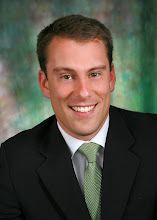
Remarks for Ross Zeiger's Eagle Scout Court of Honor
Hans Zeiger
May 19, 2009
It’s a pleasure that Ross asked me to speak. He and I happen to go way back. We shared a bedroom for two years after he was born, and he would rise every morning and crawl out of his crib and summon me to prepare his bottle of milk, warmed to just the right temperature in the microwave. Ross would help to let in Sammy the cat and together we would feed him. And then we would begin the descent down to the basement TV room, where, for fear of embarrassing Ross, I will not mention the name of the show that he watched. I will only tell you that it featured a purple dinosaur. I will also tell you that for many years Ross’s nickname from Grandpa Ed was—Barney.
Now the color purple is significant because as you know, Ross is a Viking at Puyallup High School, where the colors are purple and gold, and since he was a very small boy he has been determined to become a Washington Husky. Gold is also significant, I should mention. Ross has been scheming to become rich also since he was a very small boy. A few weeks ago, a crowd of kids had gathered around Ross here at the church, and Katherine Stone asked, “Ross, what do you want to be when you grow up?” “A billionaire,” he replied.
And in that sense, Ross Zeiger will not be living up to his name. To our ancestors in Germany, I understand that the word Zeiger meant a homeless person who sat beside a signpost outside of a tavern to beg for the leftover food. I assure you that Ross will not be living up to his name. He will be a millionaire before long.
Also, he will spend his millions, which is not a Zeiger thing to do either. From our great, great grandfather Wiley back in Illinois we inherit a famous trait of frugality, most notable today in the person of Grandpa Ed. Ross, a passionate connoisseur of all the latest technologies and gadgets, did not inherit that particular family trait.
But all along he knew what was truly important. One morning as we were driving to church, Ross was about two or three, and he was learning a children’s catechism question. As a reward for memorizing the catechism, he would get a piece of candy. Well, the question was the very first question of the children’s catechism: “Who made you?” “God,” he replied. Mom’s arm reached back and deposited a lovely little candy into Ross’s hand, which he quickly inserted into his mouth. After he had chewed on it for a moment, he uttered back to Mom, using his very best manners, “More God, please.”
Well young Ross was out at Ocean Camp and Meeker Lakes with Dad and the Scouts years before he himself was a Boy Scout. He had probably finished all the camping requirements for First Class and induction into the Royal Order of Siam by the turn of the millennium. And then, over the course of his Scouting career, Ross proceeded to achieve a long string of extraordinary feats. After Joe had recently posted a list on Facebook of “25 things you don’t know about me,” Ross, not to be outdone, followed with his own list. They included, I think, reaching the top of Everest, winning several Olympic events, and curing AIDS, which I think was his Eagle project.
Well Ross has exerted a profound influence on the culture of Troop 174 these past several years. He has added character—as well as mischief. There are generational cycles in a Boy Scout troop. I remember hearing how good and well-behaved we were back in my day. Ross’s day—is another story. If there was a microwave in an abandoned ski lodge, or a fire extinguisher in a bulldozer on a backwoods fire road, or a phone number on a billboard on a roadtrip—you can bet they found a use for it.
But there was one occasion, well-enshrined in the Troop 174 folklore, when Ross and his Scouting buddies seemed to be saints. It was when we went to Maupin Oregon for a 50-rafting trip on the Deschutes River. We were camped in a public campground, next door to a family of angry drunks with a flea-ridden mangy dog named Kelly and a parrot on one side, and a convention of a hundred drunken college students on the other. Well, that night, the Boy Scouts were exemplars to the world around them.
And Ross is an example to the others. He is the sort of guy who is roundly admired by all of his fellow Scouts. Sometimes I noticed certain mannerisms and ways of talking that they would copy from Ross. They admire him in part because he is an imaginative and playful little man. Two summers ago, we were on a 50-mile hike between Crystal Mountain and White Pass. Ross and Chief and Justin created a new philosophy of life complete with its own confessional statement and hierarchy. They also schemed to take over the entire Cascade range and subdue certain forest creatures in their service. They maintained a steady denial of certain important outdoor truths, such as the existence of bears and the incidence of rain. Therefore they refused to put up a tent. They did not encounter any bears, but as they laid out under the clouds they did claim to see a white cheetah leaping over them, and then it began to rain. Ross, oblivious to such things, slept soundly at first, and then they all moved into Carlson’s tent.
Well, if you truly want to honor somebody, especially if you want to honor somebody who has yet to go into the thick of the fight of life, you honor the people who have gone before him who he will hold up as heroes. In Ross’s case we do not have to look far.
The Rosses of Scotland came from a place called Ross, and no one quite knows where it is or what happened there, but whatever it was, it was very important. I imagine the Rosses as a strong, colorful people with a sense of humor and a love for freedom, and one of their American manifestations was our great grandmother Jewell Ross, who married a Westward-bound banker named Charles Greening. There were three children. The first was Shirley. The baby was our grandma Virginia. A few years ago I was with Ross and some of his friends, and I asked them to name the people who they look up to. And the person who Ross named was his beautiful grandmother Virginia, who is with us this evening. I’ve never met the Rosses of Scotland, but if our Grandma Virginia is anything like them, I may have to consider going back to the old country.
Well, Grandma Virginia’s brother was the Rossiest of them all. He took his name from his mother’s maiden name, and so he was Ross Greening. He was an artist. He painted beautiful things all his life. He was a pilot who crashed his first plane in a Puyallup Valley berry field at the age of 13. And he was a character, a charming and fun-loving human being, and also a very great man, one of the very greatest who ever lived in Tacoma, Washington.
Not only was he a member of what has been called the greatest generation, but he is the kind of man who many others of that generation regard as their hero. He assisted Col. Jimmy Doolittle in the secret preparations of America’s first raid over Japan on April 18, 1942 and piloted plane #11 off the deck of the USS Hornet in what is known as the Doolittle Raid. It was thought to be a suicide mission, but Ross and his crew bailed out over China and made it to safety. He was reassigned to North Africa and there conducted 26 bombing runs over Italy before he was shot down over the volcanic cone of Mount Vesuvius. When he came to consciousness, he had broken his leg, and fascist soldiers carried him down the mountain to a prisoner of war camp.
Ross spent the next few months there, slowly recovering from his broken leg and painting pictures for the camp commandant in return for extra food that he delivered to the sick men in the camp. When the Italians capitulated, the Nazis rounded up the prisoners and loaded them onto a train bound for the north. American planes bombed the train, allowing Ross to escape into the Italian countryside for the next seven months, where he met up with New Zealanders and made a home in a cave high in the Italian alps.
When they were recaptured in the winter of 1943, the Germans took Lt. Col. Ross Greening to Stalag Luft 1, a POW camp of 15,000 Allied men on the Baltic Coast. There he was the American commandant for a quarter of the camp, leading art and morale programs and himself painting the war experiences of his fellow prisoners. Later those paintings and his memoirs were published under the title Not as Briefed.
He was the organizer of the multi-city POW Exposition after the war, which drew 8 million people. The Air Force made him Air Attache of Australia. He was known by one of his biographers as the Man the Axis Couldn’t Kill, but he had a weak heart that cut his life short after the war and he died in 1957. And yet as Grandma Virginia would tell you after he passed away, there are some things bigger and better than this life itself that remain with us. These are what the Book of Revelation call “the things that remain.”
Here tonight, Uncle Ross’s legacy continues in the life of his great nephew.
That inheritance began in a remarkable way. For my own part, I was in Karshner Elementary School on November 12, 1991 when a call was placed through the intercom to Mrs. Adams’s first grade class. It was my mom calling to say that I had a new little brother. And he had come at just the right moment, you see, because November 12 was also the birthday—of Ross Greening.
I should mention one more thing about that moment in 1991, because it was also a remarkable moment in the history of the world. It was a moment of profound transition when scholars were proclaiming that history itself had come to an end with the fall of the Berlin Wall, the end of the Cold War, the promise of globalization and liberal democracy. On October 29, 1991—just two weeks before Ross was born—a new word appeared on the front page of the Wall Street Journal, and that was the word “internet.” Soon it was available for commercial use, and so Ross never knew a world without it. As a matter of fact, Ross was almost tech savvy before he could walk or talk.
And yet there were also storm currents in the deserts of the Middle East, and cultural wars across America, and history was not over yet. It will continue, Ross, and you must study it, and you must prepare yourself to be a part of it. There is a lesson in the title that Uncle Ross chose for his memoirs, “Not as Briefed.” Life takes turns that we cannot anticipate. It points to the lesson of the Boy Scouts, to “Be Prepared.” It points finally to the truth of Scripture, to “Trust in the Lord with all your heart, and lean not on your own understanding. In all your ways acknowledge Him, and He shall direct your paths.”
As a Boy Scout, you know something about paths. As an Eagle Scout, you must also know something about flight. At my own Eagle ceremony several years ago, I read from the Prophecy of Isaiah, that those who wait on the Lord shall renew their strength, they shall mount up on wings like eagles. It is fitting that your Uncle Ross was a pilot. As an Eagle, you must try to emulate him.
But there’s more to your name that we need to talk about. Ross is not just Ross. He has a middle name, Edward. Now all of you I’m sure are wondering where in the world that came from.
Well, I will tell you that it came from the highest geographical point in Puyallup, known since Ed and Wilma came here in 1952 as Zeiger Hill. Back then South Hill was less populated than it is now. After the Zeigers set down roots, they effectively doubled the population.
There was a time when Ross was three years old when the family came together for a gathering and as all of our gatherings go, there was some evidence that the Zeigers had taken the command seriously to be fruitful and multiply. And when we had gotten in the car to leave, a small voice arose from the car seat, addressed to the parental department up front: “Who were all those people?”
Well, I can tell you that a Zeiger family gathering is almost another way of saying—a Troop 174 meeting. Cy, the youngest grandson, will be the seventh Eagle Scout in the family someday.
Grandpa has been involved with this troop for more than four and a half decades, and with Scouting for much longer. If you had to summarize his life, you might do it in the words of the Scout Oath or the Scout Law. He applied them to his work as a teacher and principal at Maplewood, Firgrove, Stewart, Wildwood Park, Pope, Sunrise. He exhibited them in his role as a community servant, a coach, a Kiwanian, a church elder. And most of all, he taught them to his children, and now to his grandchildren.
No sketch of Grandpa Ed would be complete without mentioning Grandma Wilma. They were married right out of high school. She was a graceful lady. She passed away in 2004. And over her headstone at Woodbine Cemetery there is an engraving of a daffodil. But that’s not all. There is a place beside it for Grandpa, and it too contains an engraving. I only mention it because of what it says about him: it is an engraving of the Boy Scout seal: a fleur de lis—and an eagle.
And so, as I said, we are here not just to honor Ross, but to honor the heroes for whom he is named. A moment ago I mentioned that Ross shares the birthday of his namesake. Well, there is another birthday I hadn’t mentioned yet. It is not a coincidence that Ross chose to schedule his court of honor the day before Grandpa Ed’s 80th birthday. As much as I hope it is a gift for Grandpa to have a sixth Eagle Scout in the family for his birthday, it does greater honor to my little brother, and to all of us Zeigers who have been Scouts and Eagle Scouts, that he is presenting this award. And before he does that, will you join me now in singing happy birthday?
Tuesday, May 19, 2009

Wednesday, April 8, 2009
Bob Mizukami: "We Had to Prove Ourselves"
Bob Mizukami: “We Had to Prove Ourselves”
By Hans Zeiger
(A version of this article appeared in the Puyallup Herald on April 8, 2009)
Bob Mizukami once visited Puyallup High School to talk about how his life changed in May 1942, two years after his graduation from Fife High School and several months after the beginning of World War II. He told about the evacuation orders, about leaving behind his home and his family’s greenhouse business, about entering the Puyallup fairgrounds, about the barracks and the barbed wire and the year that there was no Fair, and the prejudice. “Most students from Puyallup High School didn’t know anything about those things,” he said. “They were surprised to hear that such a thing would be happening in our country, in our own backyard.”
“It was kind of a shock to us,” said Mizukami, “because we didn’t know that we would have to leave. We were born and raised in America. We were American citizens. We could understand our parents being interned, but evacuation should never have happened to anybody of American citizenship.”
The Mizukami family and hundreds of other evacuees of Japanese descent from Seattle and the Puyallup Valley reported to Puyallup City Hall between May 14 and 16. Families could bring only what they could carry as they entered the fairgrounds that week. Camp administrators issued mattress covers to be filled with straw and assigned families to small rooms in makeshift barracks. Over the next few months, the internees ate together in a mess hall, organized dances and activities, and learned to get along in the close quarters of “Camp Harmony.”
In September, the internees were relocated by train to the desert of Idaho. They called the new camp “Minidoka.” There, 211 young men enlisted in the military, including 36 from Pierce County.
All three Mizukami brothers—Bob, William, and Frank—enlisted and served in the 442nd Infantry, an all-Japanese-American regiment. All three had good reason to stay at Minidoka with their parents and two sisters, and all three volunteered. “Others may have said that they don’t know whether they could go into the service with their parents in the concentration camp,” said Bob. “We went in with a different purpose. We had to prove ourselves.”
William, a quiet Fife High basketball player, was younger than Bob by one year and one day. When Bob left the internment camp for training at Fort Douglas, Utah, he instructed William to care for the family in his absence. “Well, he had other ideas about that,” Bob recalled. It wasn’t long before William abandoned his familial duties and met up with Bob in the infantry school at Camp Shelby, Mississippi.
The two brothers were assigned to the same company in the 522nd Field Artillery. They went ashore at Anzio in June 1944 and fought through German-occupied territory below the Arno River. The fighting was intense. One night, about three weeks into the Italian campaign, the boys from Fife found a moment to chat. “Some of those shells are getting awfully close,” said William “Well,” said Bob, “what do you want me to tell them when I get home?” No reply. They only laughed.
The next day, July 11, 1944, William paid the ultimate price for the country that had interned him in the Puyallup fairgrounds. “He was killed from a mortar shell. We were in the same company, but I didn’t know about it until several hours later that evening. There was no break. They were stacking them up like cordwood. I really didn’t spend that much time thinking about it. You see all that death all the time. It was another casualty and that’s about it.”
The 442nd advanced through Italy into France, liberating Bruyeres in October and rescuing the Texas 36th Infantry Division, the “Lost Battalion,” at the price of over 200 Japanese-American lives. While Bob moved from a jeep to help clear a tree that had fallen across a road in the Vosges Mountains, a German mortar blasted the side of the road and sent shrapnel into Bob’s face. He was quickly bandaged and returned to his company.
The survivors spent the hard winter of 1944-1945 defending Nice, then moved south back into Italy to conquer the Germans’ Gothic Line. Bob and the 442nd had far more than their fair share of combat. “A lot of time we were considered cannon fodder, getting tough assignments,” said Bob.
Finally—even after the loss of one brother and the wounding of the other—Frank joined the Third Battalion of the 442nd late in 1944. He was aboard a ship bound for Italy when the war in Europe came to a victorious end.
Though many Puyallup Valley Japanese-Americans moved elsewhere after the war, Bob and Frank Mizukami returned to their furusato—their home—to give even more to the community that they and William left in 1942. Bob and Frank resumed their father’s greenhouse business. After helping to incorporate the City of Fife in February 1957, Bob sat on the city council, serving as mayor from 1980 to 1987.
“I was proud to become mayor of my native area that I was evacuated from, booted out, so to speak,” he said.
Hans Zeiger is documenting the experience of local veterans and Japanese-Americans during World War II. Contact him at 253-905-8160 or hanszeiger@yahoo.com.
Wednesday, February 4, 2009
Depression Days in Puyallup
Depression Days in Puyallup
By Hans Zeiger
(A version of this story appeared in the Puyallup Herald on Feb. 4, 2009)
The stock market crashed the year after Ezra Meeker died. He had watched Puyallup grow from a camp in a thick forest to a prosperous, growing town. He, more than anyone else, was to credit for Puyallup’s success. But in his later years his mind turned from the blessings of growth back to the changeless values of the place he loved. He hoped that the younger generations would remember the hardships and hopes of the pioneers.
Sure enough, the Depression generation in Puyallup came to know difficulties and dreams, but it was because they experienced those things for themselves.
In 1937, a Swedish carpenter named Nicholas Hogman of Sangamon County, Illinois sold almost everything he owned, purchased a truck, and built benches in the bed and a canopy over the top. His wife Mary sat in the back in a rocking chair, surrounded by seven of their children, as two more sat in the cab with Nicholas. Their 18-year old son, who had never driven a truck before, took the wheel all the way to Issaquah. The price-tag on the weeklong road-trip, truck included: $75.
Relatives in Issaquah advised the Hogmans to seek work in the berry fields of Puyallup. So the family spent the summer of 1937 picking berries. Soon Nicholas found work for a cherry farm in Sumner and bought a little house on 23rd Avenue Northeast. Somehow they made ends meet. “We could make $50 a season picking berries,” recalls Manford Hogman. “And that would buy us all of our school clothes and supplies and everything we needed.”
The Hogmans understood the word “need.” So did the Stempczynski family. A few years ago, when Eleanor Stempczynski Brecht saw limousines pulling up for Aylen’s Ninth Grade Dance, she had to chuckle.
In all of 1935, Stanley Stempczynski made $80 from his Riverside berry, rabbit, and chicken farm. With his daughter graduating from Puyallup High School in June, Stanley stretched his money to ensure that she could celebrate in style. “We had a dress-up day on the last day of school,” Eleanor recalls. “The girls got dressed up in new outfits. Mamma took me into Tacoma to get a suit. She didn’t have enough money for shoes, so she had to borrow $5 from my sister.”
Not everyone in the Class of 1935 was so fortunate. Eleanor’s cousin was among those who couldn’t pull together the funds for dress-up day. She stayed home. “Those are the kinds of things that hurt your feelings when you couldn’t do the things that others did,” said Eleanor.
“We didn’t get to play much,” said Eleanor’s younger cousin Stanley Stemp, who managed to play basketball at school as long as he was back on the farm doing chores before his father. “We came home and had duties to do: clean the pig pens every Saturday, every night clean the cow and horse stalls, when you’re done with the chicken stalls pick up the eggs.
“Every night you had to chop old cedar berry poles for kindling. If in the middle of the night dad didn’t find it there he’d wake you up to go get it. It was hard to learn, but that’s how you learned.”
In the Depression days people felt a sense of responsibility, the realization that a mother and father, a grandparent or a grandchild, a daughter and son depended on you. It shaped the character of a generation. Describing his high school classmates, Hogman recalls, “The guys weren’t rowdies in those days like they are today. If they had anything, they had to work for it. The kids all had to work. Everybody who had more than a city lot had raspberries and blackberries growing on it.”
It was long before the age of iPods and cell phones. But according to Eleanor, “There were a lot of advantages about that era—not as many things to amuse themselves with—but they learned how to work.”
They also learned how to give. When the occasional hungry Tacoman showed up on their back porch, the Stempczynskis always had chicken from the farm to give away. Then there was Marty Martinson of Queen City Grocery downtown, who spent his lunch hours delivering groceries to elderly shut-ins. And there were extraordinary teachers, like Mr. Matthews with his old-fashioned clothes, and Mr. Starbird with his passion for history, who inspired the students of Puyallup High School to dream of a better future.
But for all the impoverishments of the age, the people of Puyallup were rich in a way that few other people have ever been. Amid work, people found time to celebrate the passages of life. It was in 1933 that the Daffodil Festival began. The berries followed the daffodils, and the rain watered the rich soil and muddied Viking Field before the rivalry with Sumner, and then there was the Fair.
And in the memories of Puyallup’s oldest members, the great thing about the place where they grew up was that they belonged there, and the place belonged to them. The town offered a sense of place to anyone who was born there or moved there on the condition that they could give back something to their neighbors when they were able.
Indeed, the generation of Puyallupans that grew up during the Depression has given us more than any other. We owe them our thanks.
Hans Zeiger lives in Puyallup. If you have stories about the Depression, contact Hans at 253-905-8160 or hanszeiger@yahoo.com.
Wednesday, January 7, 2009
The Legend of Doug Kelley
The Legend of Doug Kelley
By Hans Zeiger
(A version of this article appeared in the Puyallup Herald on January 7, 2009)
We mustn’t forget the greatest daredevil who ever called Puyallup home. His name was Talbot Douglas Kelley, but in the 1930s, “Doug” was enough for anyone to know that something very dangerous was going on in town.
Doug would hop on his motorcycle and drive to a straightaway, and then, hurtling down the avenue, would draw up his feet onto the seat and come into a standing position. The neighbors grew worried as they saw him pass by their front porch on a summer’s evening, standing on his motorcycle like Evel Knievel before his time. This feat of acrobatics was a regular subject for town discussions about public safety, as were Doug’s flying habits.
In the age of Lindbergh, Doug Kelley aspired to greatness in the sky. He took up flying in his teen years, saving his money from a job delivering telegrams and special mail to pay for lessons and plane rentals. Taking off from the little airstrip along the river, he would come down low over his girlfriend’s house in the Riverside area, buzzing in for a noisy greeting. “He did things our parents shuddered at,” his classmate Frank Hanawalt recalls. “We all thought it was great.”
Some say that Doug once flew a small plane beneath the Puyallup River Bridge at the Meridian crossing. Others call this a myth. “He was always pulling something,” said his friend Earl White. “He was a pretty darn nice guy on top of it.”
After graduation from Puyallup High School in 1939, Doug joined the Royal Canadian Air Force. Though America would not be at war for another two and a half years, Doug’s ambitions for glory transcended the national border as well as the ground. With training, Lt. Kelley was off to England for the Battle of Britain. He commanded a night-fighter in the Nazi-laden sky over London in the fateful summer of 1940—and survived. Nearly a fifth of the 3,000 allied flyers in the Battle of Britain were killed.
With Doug Kelley, it was the enemy that had to worry, said Jackson Granholm, Kelley’s high school chemistry lab partner and later a navigator on bombing raids over Germany with the Eighth Army Air Force. “Knowing what a tough cookie and a wild man Kelley was, I felt sorry for the German air-crews,” Granholm wrote in his 2000 memoirs.
After the U.S. entered the war, Lt. Kelley returned home and went to work for Uncle Sam. The Army Air Corps assigned him to lead advanced air training at an air base in Florida. After months of teaching his craft to the rising generation of flyers, Kelley was apparently restless. He wanted to get back into the action of war. His request for transfer to the South Pacific was granted.
In October 1943, Doug came home to Puyallup on furlough. His brother Jack, a field artilleryman then stationed at Fort Ord, was also home. For the two brothers and their mother Florence, it was the first time their little family had been together for three years. And it would be their last.
In December, Lt. Kelley flew over the Pacific in a P-38 or a P-70 to join up with the 419th Night Fighter Squadron under the Thirteenth Air Force newly arrived at Guadalcanal in the Solomon Islands. The 419th went to Guadalcanal to reinforce the 6th Night Fighter Squadron, Detachment B, which had been flying P-38 and P-70 patrols in the area since February. The P-70s flew best under 10,000 feet, only half the altitude of the Japanese bombers. When the superior P-38s were brought to Guadalcanal, the difficulty of spotting enemy planes in the dark of night from an altitude of 30,000 feet made it nearly impossible to intercept the Japanese until ground crews turned searchlights onto the offending bombers.
At this rate, Detachment B could claim only one kill for each of the two types of aircraft by the time the 419th arrived in the fall. Meanwhile, Japanese Zero bombers inflicted serious damage on U.S. targets at Guadalcanal.
On his night mission of January 10, 1944, Lt. Kelley’s plane went down in the Pacific. He was reported as MIA. Florence Kelley learned that her son was missing a few weeks later. But of course, in Doug’s business, MIA in the Pacific almost certainly meant the worst.
Aboard a destroyer escort in the Pacific, Frank Hanawalt received a letter from his mother with news of Doug’s death. “My mother wrote to me that he had been killed by a Japanese Zero and that it was speculated that the type of flying between the European and South Pacific theater was different and that he hadn’t quite adapted to it yet.”
Doug’s high school classmate Essey Faris playfully imagined him crash-landing on a remote Pacific Island and soon “setting up a kingdom.”
But if anyplace deserved Doug for royalty, it was our own daffodil frontier. Lt. Doug Kelley, who lived and died dangerously, should never be forgotten here.
Wednesday, December 3, 2008
Where were you on Pearl Harbor Day?
 |
| Leonard Humiston about a year before the Pearl Harbor attack |
By Hans Zeiger
(A version of this story appeared in the Puyallup Herald on December 3, 2008)
Late on December 6, 1941, a dozen B-17 “Flying Fortresses” left Hamilton Field, California, bound for the Philippines. In the co-pilot’s seat on plane number 7 of the 38th Reconnaissance Squadron sat Lt. Leonard Smith Humiston of Puyallup.
Len joined the Army Air Corps immediately after graduating from Puyallup High School in 1935, training to fill the posts of mechanic, gunner, and pilot. Earlier in 1941, he married a nurse from Puyallup named Frances Nelson. The ceremony was held at Pioneer Baptist Church, across the street from the Meeker Mansion.[1]

In Pearl Harbor ahead, Lt. Humiston could make out smoke. He said he guessed that the Navy was welcoming the incoming Flying Fortresses with a 21-gun salute.[3] When a swarm of fighter planes sped toward them, they expected a friendly escort to Hickam.
Then reality hit. Those fighter planes were not American planes, and that smoke in Pearl Harbor was something other than a Navy welcome. As Humiston’s pilot Lt. Robert Richards prepared to land at Hickam, a Japanese Mitsubishi A6M2, known as the “Zero,” buzzed around the B-17 and began pounding it with machine gun fire. There was little that the unarmed American plane could do except abort the landing and fly east, back out over the ocean.
At sea, Richards steered the plane back to Hawaii, this time for a downwind landing at Bellows Field. The Flying Fortress bounced onto the runway at high speed and Richards could not slow it down in time. The B-17 crossed the end of the runway and skidded into a ditch. But the troubles weren’t over on this completely unexpected combat morning. Japanese Zeroes spotted the downed plane in the ditch. One after another, the Zeroes strafed the helpless B-17, riddling it with bullets.[4]
When they finally got out to look for refuge at Bellows, Lt. Humiston and his crew had survived the first American air combat of World War II. Others in the group from Hamilton Field were not so lucky.
At least two other Puyallup men were at Pearl Harbor that day. Harold Brown was a sailor on board the USS Nevada, which was badly damaged by the Japanese bombs. In Schofield Barracks, Niels Dahl awoke to the sound of the planes dive-bombing on Weaver Field. He ran to the roof of the barracks and manned an anti-aircraft gun. “All I could see was my country’s under attack. It’s my job to defend it. Let’s do it,” he told Paul Hackett of the South Hill Historical Society in 2004.
Back home, the midday sun was shining through Ralph Smith’s window on 6th Street Southwest as he looked after his eleven-month old son, who was born on New Year’s Day, 1941. Outside, his wife worked in the yard. Upon graduating from Puyallup High School in 1936, Ralph had served in the Navy aboard the USS Louisville for three years, and now he had a job at Boeing and a little family. As he looked over his blessings, the radio buzzed in the background. An announcer’s voice interrupted Ralph’s concentration. It was a news bulletin. Pearl Harbor had been attacked.
Ralph wasn’t entirely surprised. “We knew we were going to fight the Japanese, we always knew that. It was just such a tense feeling about that.”
Five blocks down 6th Street from the Smiths, Betty Porter was home for the weekend with a friend from the University of Washington band, about to get on the road back to Seattle for a performance. When Betty was informed of the attack, she could not have known the cost that her pioneer family would pay in the war. Her brother Mark would be killed in Germany in 1945.
Many Puyallupans learned of Pearl Harbor as late-morning church services let out. Len Humiston’s family heard the news as they left First Christian Church. “He might be over there,” his sister Gene worried.
Katharine Gronen’s history of Christ Church Episcopal includes an account of December 7 by Bernice Cook: “We had just finished the service on that December Sunday morning and were preparing to take off our choir robes when one of our members who had stayed home that morning burst into the choir room to announce, ‘Pearl Harbor has been bombed!’ Standing there stunned, we overheard four strangers—two of them men in uniform—asking Dr. Sidders if he would marry one of the couples. When he agreed, we decided that we would also wish the young couple Godspeed by witnessing the ceremony and thereupon filed back into the choir stalls. Whether we sang something, I don’t remember, but we added our blessings to the minister’s.”
At Seattle Pacific College, rumors of Pearl Harbor spread through the dormitory hall where former Puyallup High School student body president Marie Jones lived. She joined a little assembly down the hall. “One of the girls was from Hawaii, and I’ll never forget that. It was very hard on her. We gathered around and listened to the radio, and cried, mostly.”
Jim Riley of Puyallup was also in Seattle, working at the Boeing factory. Riley had gone on lunch break. A few workers learned of Pearl Harbor on their radios. A din of voices began to crescendo through the building. “You could hear the volume of people who’d heard on the radio,” said Riley.
Among Japanese-Americans who lived in the Puyallup Valley, news of the attack was especially shocking. Bob Mizukami was competing in his second game at the annual Tacoma Furuya Alley Cats bowling tournament at the Broadway Bowling Alley when the radio was turned up with the bulletin about Pearl Harbor. Tom Takemura was at home listening to the noon news when he heard about the attacks. Through the window, Takemura saw women running in the fields to where their husbands, sons, and brothers were laboring. Takemura picked up the phone to spread the word, but the lines were jammed.[5]
“I remember I ran home around 1:00,” recalled John Watanabe. “I knew Gene Autry was going to be on the radio. They kept breaking in and telling military personnel to report to camp. I said, ‘What the hell is going on?’”
Within a few months, Japanese-Americans in the Puyallup Valley were evacuated as internees to the Puyallup Fairgrounds, and later to Eden, Idaho. “Everything was good until Pearl Harbor
came by,” said Watanabe.
For the Fort Lewis soldiers at Mount Rainier on December 7 training for ski patrols, the news had immediate implications. Don Henderson of Puyallup was skiing on the mountain when the soldiers arrived. First he noticed that they were wearing white capes. Then he noticed that they were making an abrupt retreat, heading out the way they’d come not long before. “All of the sudden, they were leaving, getting off the mountain. I skied down to the bottom, and said to this guy, ‘You guys just got there. Why are you leaving?’”
“Haven’t you heard?” came the reply. “Pearl Harbor was just bombed.”
So it was that Henderson, too, joined the day’s traffic off the mountain, off and away to a world at war. Henderson joined the Navy and was stationed for a time at Pearl Harbor. It would be among his tasks to recover corpses from the sunken USS Oklahoma.
The USS Nevada fared better than the Oklahoma on December 7. As mentioned, Puyallup’s own Harold Brown was serving aboard the Nevada when it was attacked. Brown survived, as did his ship.[6] After temporary repairs, Nevada ambled across the Pacific to the Bremerton Naval Shipyard. There Al Gerstmann of Puyallup went to work on the repairs.
When the guns of the Nevada pounded off the coast of Normandy during the Allied invasion of France, Gerstmann was there to hear them. From the English Channel, they volleyed inland past Omaha Beach to where the Germans were encamped. “My ears are still ringing from that concussion,” he says.
But on Monday, December 8, Gerstmann’s ears were tuned to the voice of President Roosevelt as he addressed the nation at war. The radio echoed through the Puyallup High School commons, where hundreds of students were gathered. “It was very quiet and solemn,” said Jane Bader Trimbley, a junior at the time. “I don’t think any of us realized how dire it was and how big the sacrifice would be.” Jane’s boyfriend, Gordon Barker, would join the Army immediately after graduation. He would be killed in the Battle of the Bulge.
Almost every person sitting silently in the Puyallup High cafeteria that day would serve the country in some way in the years to come. Over fifty of Puyallup’s young men never returned from the war. We owe them our thanks. They were, truly, the “greatest generation.”
Hans Zeiger is a fourth-generation Puyallup resident. If you have memories of Pearl Harbor Day that you would like to share, contact Hans at 253-905-8160 or hanszeiger@yahoo.com
[1] Interview with Gene Humiston Cotton, 19 Aug. 2008.
[2] Leatrice R. Arakaki and John R. Kuborn, 7 December 1941: The Air Force Story. (Hickam Air Base, HI: Pacific Air Forces Office of History, 1991), 72-73. See crew lists in appendix, nine per crew.
[3] Owens Archive
[4] Arakaki and Kuborn, 73.
[5] Magden, 113.
[6] Interview with Gilman Welcker, 22 Aug. 2008.
Wednesday, November 5, 2008
Dick Sloat, American Hero
Dick Sloat for President
By Hans Zeiger
(A version of this article appeared in the Puyallup Herald on November 5, 2008)
If any young Puyallupan ever appeared destined for the White House, it was Richard O. Sloat. The born statesman from the Woodland area[1] could think, speak, and persuade better than anybody in town, and everybody liked him. Emphasizing his local renown, the Puyallup Valley Tribune once noted that he was “known to hundreds in the Valley as ‘Dick.’”[2] It would be about like saying “Abe” in Springfield, or “Teddy” in Manhattan, or “Ike” in Abilene. All anticipated the day when Dick would make Puyallup a household word in America.
With red, wavy hair like Thomas Jefferson and a million-dollar smile like Ronald Reagan, he shared the birth year of John F. Kennedy, 1918. He was slightly built. His eyes were alive with optimism.
“I think he would have to go down as one of the really outstanding students of Puyallup High School,” said his friend Frank Hanawalt, who was three years younger than Dick and thought of him as a role model. “He was almost like an inspiration to me. I often thought in my younger years that he was going places, that he might be a Senator or even more.”
In one sense, he was “even more.” When I called the old Marine Corps commanding officer who was with Dick when he was killed on the island of Saipan in 1944, the tribute was higher than the ones we accord to mere politicians. I only mentioned the name of Lt. Richard Sloat. “My God, my God,” replied Col. Ed Bale of New Mexico. “You raise the hair on the back of my neck, and I’m glad you did, because he was a fine, fine, fine man.”
In the battles of Tarawa and Saipan, Sloat was Bale’s executive officer in C Company, First Corps Medium Tank Battalion. To the men of C Company, Dick was known as “Red.” After he assigned Doug Crotts of North Carolina as his corporal at Camp Pendleton, California, Crotts formed the opinion that “Sloat was one of the nicest gentlemanly people I’ve ever known.”
Minus the southern drawl, Puyallup could say as much.
In high school, Dick was involved in drama and debate, but he was known to his peers in the Puyallup High School Class of 1936 and the surrounding classes as the preeminent student leader of their generation. Elected student body president in his senior year, he was a natural talent in school assemblies and speeches. “He could have been the yell leader as well,” said Hanawalt.
Frank’s father Paul Hanawalt was the superintendent of the school district. “I knew how much my parents admired him. I know that one of his great fans was the principal Harry Hanson, who just really enjoyed it when Dick was student body president.”
Dick’s classmate Ralph Smith recalled Dick’s charismatic presence at PHS during the Depression years. “He was a very outgoing guy,” said Smith, “very popular with everybody.”
Following high school graduation, Dick studied at the College of Puget Sound, where he excelled in theater and speech and debate competition. “He would think on his feet and speak extemporaneously without having notes or having to think ahead of time,” said Hanawalt, who matriculated at CPS in 1939 when Dick was in his senior year. By then, no surprise, Dick was president of the college’s student body.
Frank was also involved in speech and debate, and in his freshman year he competed in a campus speech competition on the question of permanent peace, less than two years before the Japanese attacks at Pearl Harbor. Since Dick had won the competition in 1939, he chaired the committee of three that awarded the prize in 1940. The prize went to Frank. What Frank especially remembers about winning that competition was that Dick approached him afterwards and “really congratulated me.”
Graduating from CPS with high honors, Dick took a job as a speech and drama teacher at Kelso High School in southwest Washington. He taught there for two years; he doubtless excelled at it.
When the war came, he volunteered in the Marine Corps. Following Officer Candidate School, Lt. Sloat was assigned as executive officer with the First Corps Tank Battalion’s C Company, in training at Camp Pendleton, California.[3] Each platoon had four tanks, and Lt. Sloat was the commander of his platoon’s lead tank, an M4A2 Sherman dubbed Cobra. There were four crewmen besides “Red”: Cpl. Buck Webb was the driver, Pfc. Jack Trent was the assistant driver, Pfc. Hank Trauernicht was the gunner, and Cpl. Bill Eads was the radioman.[4] Lt. Sloat earned both the respect and friendship of the company, but especially of the Cobra crew. “He was real easy to get along with,” said Cpl. Eads of Salinas, California. “Everybody liked him.”
On July 19, 1943, First Corps shipped out of San Diego aboard the sluggish U.S.S. Ashland, cruising 31 days to New Caledonia. There they drilled and waited for three months. In mid-November the tankers re-boarded the Ashland and joined an armada northward to the island of Tarawa.[5]
Puyallup paid a heavy price in the Battle of Tarawa. In the initial moments of the amphibious invasion on November 20, a 26-year old Pfc. named Johnny Holm, of 721 Stewart Street, was killed in the water. Then 27-year old Pfc. Carol Lundrigan, a 1934 graduate of Puyallup High School who was wounded a year earlier in the Battle of Guadalcanal, was struck down on the island.[6]
C Company loaded into landing crafts to join the third wave. Unable to traverse a reef hundreds of yards from a landing zone called Betio, the landing craft carrying Cobra deposited its tanks onto the reef. They plowed their way onto the beach, littered with the bodies of the first and second waves. And then they drove on through what Cpl. Eads describes as “random” shooting.[7]
Most of C Company’s fourteen tanks were disabled in the first day of the fight at Betio.[8] Cobra defied the odds and tracked to the edge of a Japanese airstrip by nightfall, where the crew rested.
Early on the second day, Cpl. Webb got under the tank through a trap door, probably to check up on a maintenance issue. A Japanese sniper was watching. Webb took a fatal bullet. As “Buck” lay dying in the Cobra, Lt. Sloat administered morphine.[9]
Pfc. Trent took over as driver. Through the morning and early afternoon, Cobra launched 75 mm shells at targets around the airstrip. Then Lt. Sloat received orders back to the beachhead at “Red Beach One” to take out a Japanese gun emplacement along the seawall. He directed the tank out along the carnage-laden beach and into shallow water to fire on the enemy.
As Cobra approached its line of fire, with the Japanese guns overhead training for an exchange, the Sherman suddenly tipped onto her side in a massive shell crater. Machine gun fire exploded from the seawall, but now water was seeping into the helpless tank and the crew compartment was filling up. The four Marines had no choice but to bail out through a rear hatch and slide into the water, hoping to evade the machine guns.[10]
Cpl. Eads described what happened next. “I had gotten out of the tank and was swimming towards an area that looked like it might be safe, and I got hit by a 50 caliber in the water. I think it was a 50 caliber—it was a big enough hole.” Trent was also wounded in the water, and he and Eads regrouped on the beach to locate a medic. They were evacuated to a hospital ship bound for Hawaii.
As for the red-headed lieutenant from Puyallup, he apparently made it to shore without a scratch. He survived Tarawa, and the battle concluded two days later.
Bill Eads tells me that the Cobra still sits in the haunted waters off Red Beach One. It bespeaks a parting too sudden. Next month I’ll write about Dick’s final acts of heroism on Saipan. That also, for his hometown, was a parting too sudden.
This election week, we could wonder what life would be like if Dick had come home. He might have figured prominently on the ballots of the twentieth century. But because of the price he paid—and the price that Johnny Holm and Carol Lundrigan and Buck Webb paid—we were able to cast our votes this week as citizens of a free country. We should never take that for granted around here.
Hans Zeiger is a fourth-generation Puyallup resident. He is collecting stories of Puyallup’s World War II veterans. Contact him at hanszeiger@yahoo.com or 253-905-8160.
[1] Interview with Gene Cotton, 19 Aug. 2008.
[2] “Lt. Sloat Killed on Saipan,” Puyallup Valley Tribune, 4 Aug. 1944
[3] Eric Hammel and John E. Lane, Bloody Tarawa: The Second Marine Division, November 20-23, 1943. (St. Paul, MN: Zenith Press, 2006), 264.
[4] Cobra, Tarawa on the Web, http://www.tarawaontheweb.org/cobra.htm, accessed 29 Oct. 2008.
[5] Interview with Doug Crotts, 19 Oct. 2008.
[6] Puyallup Valley Tribune, “Two Puyallup Boys Lost in South Pacific,” 31 Dec. 1943; interview with Bliss Lundrigan Welcker, 30 Aug. 2008.
[7] Cobra, Tarawa on the Web, http://www.tarawaontheweb.org/cobra.htm, accessed 29 Oct. 2008. “Cpl. William H. Eads, Jr.,” Tarawa on the Web, http://www.tarawaontheweb.org/billeads.htm, accessed 29 Oct. 2008. Interview with Bill Eads, 19 Oct. 2008.
[8] Cobra, Tarawa on the Web, http://www.tarawaontheweb.org/cobra.htm, accessed 29 Oct. 2008.
[9] Interview with Bill Eads, 19 Oct. 2008.
[10] “Cpl. William H. Eads, Jr.,” Tarawa on the Web, http://www.tarawaontheweb.org/billeads.htm, accessed 29 Oct. 2008. Interview with Bill Eads, 19 Oct. 2008.
Wednesday, October 1, 2008
The Aylen Legacy
The Aylen Legacy
By Hans Zeiger
(A version of this article appeared in the Puyallup Herald on October 1, 2008)
This week, Puyallup will dedicate Aylen Junior High School’s new campus. As an Aylen alumnus, I take some pride in the event. We should also celebrate the man for whom the school is named. Dr. Charles H. Aylen leaves a legacy in Puyallup of service in health care and education.
Charles Aylen was born near Mandan, North Dakota in 1889, the year that his birth state and his adopted state both entered the union. He grew up on the frigid buffalo plains where the Missouri River forms the Heart Tributary.
Aylen studied medicine at the University of Manitoba in Winnipeg, earning his doctorate just as Canada entered the World War in 1914. He joined the Canadian Army as a physician in the medical corps. While serving in a British military hospital, he fell in love with a young nurse named Beatrice.
Dr. Aylen returned to Mandan with a German sword, a French 75 mm field gun, and a British infantry helmet. Many years later, Dr. Aylen enthusiastically donated these relics of the First World War to Puyallup’s scrap drive of the Second World War. Such things were expendable compared to the real treasure of Dr. Aylen’s war years—Beatrice—who soon made her way to North Dakota for the wedding.
Dissatisfied by the plains, Dr. Aylen and his new bride set off for the Pacific Northwest. They settled in Puyallup in 1919, and soon Dr. Aylen partnered with Shirley Berry to begin a small clinic in a private house in Sumner. It was Dr. Berry who established the Puyallup Valley Hospital at Meridian and Fourth Avenue Northwest in 1922. Along with Dr. Charles Morse, Dr. Berry and Dr. Aylen comprised the medical staff of the new hospital. The doctors’ offices were on the ground floor, and the hospital rooms were on the second floor.
In the decades to come, Dr. Aylen delivered thousands of Puyallup’s babies and cared for them as they grew. As a father himself, Dr. Aylen took increasing interest in the quality of life of Puyallup’s young. He served two terms on the Puyallup School Board in the 1930s and 1940s, working closely with the legendary superintendent Paul Hanawalt.
Dr. Aylen retired in the late 1940s. The following decade, a management change at Puyallup General Hospital turned it into Good Samaritan Hospital. The Aylens spent part of their retirement years in La Hoya, California.
I visited with Dr. Aylen’s son Bob several months ago. Bob and his wife June still live in the community, and they attend monthly reunions of the Puyallup High School Class of 1939. Dr. Robert Aylen worked for decades as a dentist in Puyallup, himself serving two terms on the Puyallup School Board in the 1960s alongside another junior high school namesake, Dr. Vitt Ferrucci.
Also like his father, Bob Aylen is a veteran of a world war, having flown B-26s in Army Air Corps training programs. He spent the early part of the war working in the Tacoma shipyards. He studied dentistry at the University of Washington and began his practice above the Rose Restaurant in 1950. Later, he and Ransom Convis opened a dentist office next door to the Meeker Mansion, where they expanded their partnership to include John Parrish. Bob Aylen spent forty years practicing in Puyallup, retiring from the dental profession at the age of seventy.
Charles Aylen and Bob Aylen stand out among the “generous people” who have served in our community. They answered the call to serve in times of war. They came home and devoted their lives to the health of Puyallup. They championed local education as members of the school board.
In a yearbook message to Bob’s graduating class of 1939, Charles Aylen quoted the Roman emperor Marcus Aurelius: “We are made for cooperation,” he wrote. Perhaps recalling his own experience at war, and aware that portents of war were growing once again in the world, he wrote, “Yet in spite of all our advance in science and the arts, nations and races have not learned to cooperate. Therein lies the greatest challenge to education. If we can, through education, bring about a deep and lasting cooperation between all peoples of the earth, that will, in the truest sense of the word, be progress.”
It was through education, Charles Aylen believed, that human beings could learn to put aside their differences and find common purpose. He dedicated himself to that idea and died in 1981 at the age of 91, having lived to see Puyallup’s junior high school dedicated in his name.
Hans Zeiger is an Aylen Junior High School alumnus and a fourth generation Puyallup resident. He is collecting stories about Puyallup during World War II, and can be reached at hanszeiger@yahoo.com or 253-905-8160.
Subscribe to:
Posts (Atom)