

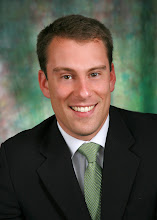
Letter to the Editor
Puyallup Herald
February 10, 2010
I want to briefly explain why I will support the February 9 Puyallup School District replacement levy. Puyallup is an education community. I am the son, grandson, and great grandson of Puyallup teachers, and I was blessed to attend Karshner Elementary, Aylen Junior High, and graduate from Puyallup High School.
Puyallup is famous for its first-class teaching staff, its exceptional athletic programs, and its tradition of community support. In this time of economic hardship, we must not raise taxes, and this levy will not increase taxes. Many areas of government spending should be cut, but cutting over 20% of the Puyallup School District budget would be too much to bear.
Please join me in voting yes for the Puyallup Schools levy.
Hans Zeiger
Wednesday, February 10, 2010

Three Great Education Statesmen from Puyallup
Three Great Education Statesmen from Puyallup
By Hans Zeiger
South Hill Sunrisers Kiwanis
February 10, 2010
My family’s story in the Puyallup area starts back in 1952, when young Ed Zeiger showed up in town and started teaching at Maplewood Elementary and eventually populated a good part of the town with his own kids and grandkids, of which I am one. My mom took her first job teaching fourth grade at Wildwood Park Elementary School 31 years ago. Ed Zeiger was the principal there, and before long he had played matchmaker for Miss Nisker and his third son Walt. I am the son, grandson, and great grandson of Puyallup teachers. I am a proud graduate of Puyallup High School. So when it comes to public schools, as you might guess, I’m against them (Just kidding).
This morning I want to talk about three great education statesmen in our community’s history. They came from different points of view, but they shared one thing in common, and that was their advocacy for our public schools. One was a conservative Republican, one was a liberal Democrat, and one was a Populist. All three of them have schools named after them.
The first education statesman was John Rogers. John Rogers was born in Brunswick, Maine in 1838 and became a professional wanderer who worked at various times as a farmer, teacher, pharmacist, drugstore manager, newspaper editor, and political organizer in the states of Maine, Massachusetts, Mississippi, Illinois, and Kansas. He was an endlessly curious and restless man who could never stay put. It was late in life when he finally found what he had been searching for all those years. He found a place and a calling. The place was Puyallup, and the calling was the leader of the Populist movement in Washington State. He had been the editor of a Populist newspaper in Kansas, and his son had moved up to the Northwest and started a newspaper of his own in Puyallup. So the elder Rogers went up to join his son. They worked on the Populist newspaper just as the People’s Party and the national movement for free silver and land reform was picking up steam. He was a tireless writer of pamphlets and books. And within a couple years, Rogers had been elected to the State Senate from the Puyallup area.
He is best remembered because he is the man who first took the words of the State Constitution seriously in working to implement them. Our Constitution says that education is the “paramount duty of the state.” That was based on an old tradition in America. One of the four organic documents of our nation’s founding was the Northwest Ordinance of 1787 which set out the purposes for the new territories, and the Congress zoned the territory to have townships where a certain area would be set aside for schools. And in that Northwest Ordinance, they wrote this, “Religion, morality, and knowledge being necessary to good government and the happiness of mankind, schools and the means of instruction shall be encouraged in these territories.” And so education spread from coast to coast. And Washington Territory took education very seriously; our first territorial governor Isaac Stevens said that every child should have the equal opportunity to receive an education.
So State Senator Rogers introduced what has become known as the Barefoot Schoolboy Bill in 1893. It proposed that there should be adequate funding for the Basic Education of every child in the state. And that was a radical thing, because it meant that if you lived in the Valley and went to Maplewood School you had just the same right to a basic education as if you lived in the Woodland area and went to Woodland School. And it was to say that all of us together have an interest in the education of the young, even the Barefoot Schoolboys and Schoolgirls. And that was actually a hard sell with the big cities at the time, because that meant they would have to pay more taxes to cover the poorer rural areas. So Rogers lost his first attempt to get that bill in the Senate. But he was a persistent man. He introduced the bill again, and it failed, and then again. His persistence paid off, because he was also a persuasive man. And in the very final days of the 1893 session, the Rogers Barefoot Schoolboy Bill passed.
Guess how much the per pupil state cost of basic education was for one year? $6.
There was a reward for Rogers’s persistence, and it isn’t just that they named a school in Puyallup after him. People in this state have always loved education, and if you are a champion of it, you can become a hero. Rogers suddenly became a sensation, and in the 1896 election, he was elected governor.
Of course, Rogers had his critics. Some accused him of being the political agent of Ezra Meeker, who the editor of the Olympia Standard John Murphy referred to as “the antiquated fraud.” Murphy had a nickname for Rogers also: “His accidency.” Murphy and others suspected that Rogers was trying to move the state capitol to the so-called “hop yard” known as Puyallup. And Rogers ended up vetoing a bill on his desk to finance the completion of a state capitol, though he suggested moving into the Thurston County courthouse as an alternative. Rogers was known for his vetoes and threats of vetoes which kept spending to a minimum in a time of economic difficulty. In fact, the state budget was $3 million in the biennium before Rogers took office, and as a result of Rogers’s veto power and influence, he was able to get the budget down to about $1.2 million for the 1897-1899 biennium. He died shortly after leaving the governor’s mansion.
And by the way, John Rogers is the only former governor in the history of our state to have a statue in his honor. It stands outside the State Education Building in Olympia, where one of the other three men I’ll talk about would eventually work.
The second Puyallup education statesman was Dr. Warner Karshner, who has become one of my personal heroes, and not just because I attended Karshner Elementary as a kid. Karshner was born in Ohio in 1880 and came out here from the Midwest to study medicine at the University of Washington. After graduating, he and his wife Ella settled in Puyallup where he began his medical practice. He delivered hundreds of Puyallup babies, performed major surgeries with great skill, and conducted the first successful stomach cancer surgery in Pierce County. He was a poet, an author, a newspaper columnist, a world traveler, a public philosopher, a scientist, and a civic booster. Everytime there was an event in town where some group needed a speaker, Karshner was the go-to man, because he always had something brilliant and insightful to say. He was the commencement speaker at Puyallup High School year after year. He served on the School Board and advocated a modern high school building in the early 1900s. Then he was elected to the State Senate as a Republican in 1916, beating William Chamberlain who was one of the Fair founders by a vote of 4,544 to 2,845.
After he won the Puyallup Valley Tribune wrote that he was “a man of courage, ability, and unswerving integrity. There will be few men in the next legislature so highly trained in mind and by habits of industry. He is at once a student and a thinker; alert, active, purposeful. He delves for the facts himself. If the truth is there he finds it … He can’t be led or fooled.”
Well Dr. Karshner was the leading conservative Republican of the State Senate in his time. He was so conservative on social issues that he not only wanted Prohibition but he wanted Prohibition on communion wine. And he was a limited government conservative. The News Tribune once wrote, “Senator Karshner … has from the very first fought for a program of economy, even to the point of raising the ire of other legislators by his determined stand for lower taxes.” He was frequently calling for tax cuts and spending cuts. Just 20 years after John Rogers was dealing with $1 million to $3 million budgets, the general budget had risen to $50 million. And that was too much for Karshner, who sat on the Appropriations Committee. “Out of a general budget of something like $50,000,000, less than half is of special interest to the general taxpayer.” Dr. Karshner was outspokenly opposed to the public power lobby. Karshner voted against funding for the Centralia Normal School, the Spokane Women’s Clinic, the Northwest Tourist Fund, an Orthopedic program, and others. He said that these were “measures which I feel have no standing in law.” And when the economy was tough around the time of World War I, Senator Karshner said that it would be wrong to raise taxes.
There’s a cartoon of Dr. Karshner standing in front of a patient on the operating table and he’s raising a giant cleaver above his head. The patient has a name tag which says, “Appropriations.”
Karshner was a limited government conservative, but that wasn’t because he was opposed to worthy community efforts. He just happened to believe that there ought to be a wide sphere for private philanthropy in any community, and it’s best if the state can create policies to encourage that rather than trying to do what caring people in a community can do just as well themselves. And Karshner practiced what he preached. Good Samaritan Hospital is one of Karshner’s legacies. He led the fundraising drive for the Puyallup Valley Hospital in the early 1920s, and the money for the hospital was raised within the community. So Karshner called on people in Puyallup to give generously to the work of building Puyallup Valley Hospital at 4th and Meridian. They raised $150,000 for the building and equipment.
It wouldn’t surprise you that Kiwanis was heavily involved in that. In fact, when the hospital opened in 1922, Kiwanis sponsored a pie eating contest to see who could be the first patient in the new hospital. I propose that you should repeat that when the new building opens next year.
In addition to his work in health care, Karshner appreciated the value of education. As I said, he was the default commencement speaker at the high school, and in his commencement speech of 1915 he told the graduates that there was something expected of them in exchange for the public investment that was made for their school years. And that was that they were to “make good.” “Don’t hide your light under a bushel,” he told them. And this man was a great orator. You can just imagine Puyallup’s doctor there in that beautiful auditorium warning the graduates to “select their course ere the undertow of life drags them away from their moorings to perish in some Sargasso sea, or into some vortex strewn with human derelicts. Life is short … and there is much to do. The graduates were standing on the threshold of the world, with material to build a bridgeway to the stars, and he hoped none of them would be content to close their career by digging a dugout. All nature speaks to them, calling them to study and learn—to come up higher. ‘Will you come; will you come,’ impressively concluded the speaker.”
Dr. Karshner may have been for limited government, but that doesn’t mean that he was opposed to funding education. In the tradition of that other budget-cutter John Rogers, Senator Karshner believed that education was a public priority. The state’s number one tax cutter and spending limiter was also its biggest proponent for school funding. He once called for “a state tax sufficient to cover the educational load.” He was a proponent for levy equalization, and he thought that the state should fully fund basic education.
Of course, not only is a school named after Dr. Karshner, but he also donated thousands of items from his travels to the Puyallup School District in honor of his son who was a Puyallup High School student when he died in 1927. So the Karshner legacy lives on.
The third great education statesman from Puyallup was Frank Brouillet, who was born the year that Ezra Meeker died, 1928. Soon after he was born a lady saw him in his carriage and said that he was a cute little buster, so he became known as Buster. He was in the PHS class of 1946, captain of the football, basketball, and track teams, involved in student government and debate. He earned his BA from UPS and his Master’s from the University of Montana, served in Army Counter-intelligence, and came home in 1955 to take a teaching job at Puyallup High School. The next year he went doorbelling across the 25th District and won a seat in the State House of Representatives. He served there for sixteen years, chairing the Education Committee and rising to become Democratic Caucus Chair. He continued to teach and earned an Ed.D in education in 1965. And so he really specialized in education there and became the go-to man on that issue.
I’ve learned more about politics in this community from reading Buster Brouillet’s oral history in the state archives than I have from any political operative who claims to know how politics works. Buster understood this community and made it a better place through his advocacy in Olympia. He understood the importance of human relationships, and that getting to know people is the best way to build a coalition. He built a coalition for Puyallup in the legislature with Leonard Sawyer when he was Speaker of the House, and then he mentored a new generation of young Democrats, all in their 20s, Marc Gaspard, Dan Grimm, and George Walk, which formed a coalition that lasted for the next 20 years as those three rose into leadership. With Brouillet moving on to be State Superintendent in 1972, people started referring to the 25th District legislative delegation as the Puyallup Mafia. So Puyallup had a great influence in Olympia because of Buster Brouillet.
He served four terms as State Superintendent. And there were a few major things that Buster Brouillet accomplished for education in this state. He was asked about his biggest accomplishments, and he listed three things. One is that he really raised the standard for school funding, which we can argue about how well those dollars are spent, but Washington State has had a fairly strong level of overall funding for our schools. Second, Brouillet invested a lot of resources into educating people with disabilities, economically disadvantaged students, and immigrant students. He said his goal was to bring them into the mainstream no matter what their background. And then third, something that he was particularly proud of, he began an exchange program with China, and he really raised the state’s consciousness about our place in the world and especially on the Pacific Rim.
He came home after that and launched Pierce College Puyallup, and then he headed up the education program at the University of Washington Tacoma before his death in 2001. And of course, the Brouillet family remains active both in education and in local politics. Marc Brouillet was my student government advisor at Puyallup High School and then went on to be principal at Ed Zeiger Elementary.
There are other Puyallup education statesmen and women who we could mention: Paul Hanawalt, Eileen Kalles, Vitt Ferrucci, Judith Billings. So we could go on, but I guess the moral of the story is that this is an education community, and that when it comes to education as a public priority, it needs to be #1. John Rogers, Warner Karshner, Buster Brouillet—three different political parties, three different backgrounds, three different personalities and ways of living, three different perspectives, but these three great men had one thing in common—I guess two things: they loved Puyallup, and they loved our schools. And I guess I’ll close by saying that I hope as a young person to whom much has been given that we can continue their legacy for generations to come.
And I should thank all of you for everything you’ve done to make that dream a reality. Thanks.
By Hans Zeiger
South Hill Sunrisers Kiwanis
February 10, 2010
My family’s story in the Puyallup area starts back in 1952, when young Ed Zeiger showed up in town and started teaching at Maplewood Elementary and eventually populated a good part of the town with his own kids and grandkids, of which I am one. My mom took her first job teaching fourth grade at Wildwood Park Elementary School 31 years ago. Ed Zeiger was the principal there, and before long he had played matchmaker for Miss Nisker and his third son Walt. I am the son, grandson, and great grandson of Puyallup teachers. I am a proud graduate of Puyallup High School. So when it comes to public schools, as you might guess, I’m against them (Just kidding).
This morning I want to talk about three great education statesmen in our community’s history. They came from different points of view, but they shared one thing in common, and that was their advocacy for our public schools. One was a conservative Republican, one was a liberal Democrat, and one was a Populist. All three of them have schools named after them.
The first education statesman was John Rogers. John Rogers was born in Brunswick, Maine in 1838 and became a professional wanderer who worked at various times as a farmer, teacher, pharmacist, drugstore manager, newspaper editor, and political organizer in the states of Maine, Massachusetts, Mississippi, Illinois, and Kansas. He was an endlessly curious and restless man who could never stay put. It was late in life when he finally found what he had been searching for all those years. He found a place and a calling. The place was Puyallup, and the calling was the leader of the Populist movement in Washington State. He had been the editor of a Populist newspaper in Kansas, and his son had moved up to the Northwest and started a newspaper of his own in Puyallup. So the elder Rogers went up to join his son. They worked on the Populist newspaper just as the People’s Party and the national movement for free silver and land reform was picking up steam. He was a tireless writer of pamphlets and books. And within a couple years, Rogers had been elected to the State Senate from the Puyallup area.
He is best remembered because he is the man who first took the words of the State Constitution seriously in working to implement them. Our Constitution says that education is the “paramount duty of the state.” That was based on an old tradition in America. One of the four organic documents of our nation’s founding was the Northwest Ordinance of 1787 which set out the purposes for the new territories, and the Congress zoned the territory to have townships where a certain area would be set aside for schools. And in that Northwest Ordinance, they wrote this, “Religion, morality, and knowledge being necessary to good government and the happiness of mankind, schools and the means of instruction shall be encouraged in these territories.” And so education spread from coast to coast. And Washington Territory took education very seriously; our first territorial governor Isaac Stevens said that every child should have the equal opportunity to receive an education.
So State Senator Rogers introduced what has become known as the Barefoot Schoolboy Bill in 1893. It proposed that there should be adequate funding for the Basic Education of every child in the state. And that was a radical thing, because it meant that if you lived in the Valley and went to Maplewood School you had just the same right to a basic education as if you lived in the Woodland area and went to Woodland School. And it was to say that all of us together have an interest in the education of the young, even the Barefoot Schoolboys and Schoolgirls. And that was actually a hard sell with the big cities at the time, because that meant they would have to pay more taxes to cover the poorer rural areas. So Rogers lost his first attempt to get that bill in the Senate. But he was a persistent man. He introduced the bill again, and it failed, and then again. His persistence paid off, because he was also a persuasive man. And in the very final days of the 1893 session, the Rogers Barefoot Schoolboy Bill passed.
Guess how much the per pupil state cost of basic education was for one year? $6.
There was a reward for Rogers’s persistence, and it isn’t just that they named a school in Puyallup after him. People in this state have always loved education, and if you are a champion of it, you can become a hero. Rogers suddenly became a sensation, and in the 1896 election, he was elected governor.
Of course, Rogers had his critics. Some accused him of being the political agent of Ezra Meeker, who the editor of the Olympia Standard John Murphy referred to as “the antiquated fraud.” Murphy had a nickname for Rogers also: “His accidency.” Murphy and others suspected that Rogers was trying to move the state capitol to the so-called “hop yard” known as Puyallup. And Rogers ended up vetoing a bill on his desk to finance the completion of a state capitol, though he suggested moving into the Thurston County courthouse as an alternative. Rogers was known for his vetoes and threats of vetoes which kept spending to a minimum in a time of economic difficulty. In fact, the state budget was $3 million in the biennium before Rogers took office, and as a result of Rogers’s veto power and influence, he was able to get the budget down to about $1.2 million for the 1897-1899 biennium. He died shortly after leaving the governor’s mansion.
And by the way, John Rogers is the only former governor in the history of our state to have a statue in his honor. It stands outside the State Education Building in Olympia, where one of the other three men I’ll talk about would eventually work.
The second Puyallup education statesman was Dr. Warner Karshner, who has become one of my personal heroes, and not just because I attended Karshner Elementary as a kid. Karshner was born in Ohio in 1880 and came out here from the Midwest to study medicine at the University of Washington. After graduating, he and his wife Ella settled in Puyallup where he began his medical practice. He delivered hundreds of Puyallup babies, performed major surgeries with great skill, and conducted the first successful stomach cancer surgery in Pierce County. He was a poet, an author, a newspaper columnist, a world traveler, a public philosopher, a scientist, and a civic booster. Everytime there was an event in town where some group needed a speaker, Karshner was the go-to man, because he always had something brilliant and insightful to say. He was the commencement speaker at Puyallup High School year after year. He served on the School Board and advocated a modern high school building in the early 1900s. Then he was elected to the State Senate as a Republican in 1916, beating William Chamberlain who was one of the Fair founders by a vote of 4,544 to 2,845.
After he won the Puyallup Valley Tribune wrote that he was “a man of courage, ability, and unswerving integrity. There will be few men in the next legislature so highly trained in mind and by habits of industry. He is at once a student and a thinker; alert, active, purposeful. He delves for the facts himself. If the truth is there he finds it … He can’t be led or fooled.”
Well Dr. Karshner was the leading conservative Republican of the State Senate in his time. He was so conservative on social issues that he not only wanted Prohibition but he wanted Prohibition on communion wine. And he was a limited government conservative. The News Tribune once wrote, “Senator Karshner … has from the very first fought for a program of economy, even to the point of raising the ire of other legislators by his determined stand for lower taxes.” He was frequently calling for tax cuts and spending cuts. Just 20 years after John Rogers was dealing with $1 million to $3 million budgets, the general budget had risen to $50 million. And that was too much for Karshner, who sat on the Appropriations Committee. “Out of a general budget of something like $50,000,000, less than half is of special interest to the general taxpayer.” Dr. Karshner was outspokenly opposed to the public power lobby. Karshner voted against funding for the Centralia Normal School, the Spokane Women’s Clinic, the Northwest Tourist Fund, an Orthopedic program, and others. He said that these were “measures which I feel have no standing in law.” And when the economy was tough around the time of World War I, Senator Karshner said that it would be wrong to raise taxes.
There’s a cartoon of Dr. Karshner standing in front of a patient on the operating table and he’s raising a giant cleaver above his head. The patient has a name tag which says, “Appropriations.”
Karshner was a limited government conservative, but that wasn’t because he was opposed to worthy community efforts. He just happened to believe that there ought to be a wide sphere for private philanthropy in any community, and it’s best if the state can create policies to encourage that rather than trying to do what caring people in a community can do just as well themselves. And Karshner practiced what he preached. Good Samaritan Hospital is one of Karshner’s legacies. He led the fundraising drive for the Puyallup Valley Hospital in the early 1920s, and the money for the hospital was raised within the community. So Karshner called on people in Puyallup to give generously to the work of building Puyallup Valley Hospital at 4th and Meridian. They raised $150,000 for the building and equipment.
It wouldn’t surprise you that Kiwanis was heavily involved in that. In fact, when the hospital opened in 1922, Kiwanis sponsored a pie eating contest to see who could be the first patient in the new hospital. I propose that you should repeat that when the new building opens next year.
In addition to his work in health care, Karshner appreciated the value of education. As I said, he was the default commencement speaker at the high school, and in his commencement speech of 1915 he told the graduates that there was something expected of them in exchange for the public investment that was made for their school years. And that was that they were to “make good.” “Don’t hide your light under a bushel,” he told them. And this man was a great orator. You can just imagine Puyallup’s doctor there in that beautiful auditorium warning the graduates to “select their course ere the undertow of life drags them away from their moorings to perish in some Sargasso sea, or into some vortex strewn with human derelicts. Life is short … and there is much to do. The graduates were standing on the threshold of the world, with material to build a bridgeway to the stars, and he hoped none of them would be content to close their career by digging a dugout. All nature speaks to them, calling them to study and learn—to come up higher. ‘Will you come; will you come,’ impressively concluded the speaker.”
Dr. Karshner may have been for limited government, but that doesn’t mean that he was opposed to funding education. In the tradition of that other budget-cutter John Rogers, Senator Karshner believed that education was a public priority. The state’s number one tax cutter and spending limiter was also its biggest proponent for school funding. He once called for “a state tax sufficient to cover the educational load.” He was a proponent for levy equalization, and he thought that the state should fully fund basic education.
Of course, not only is a school named after Dr. Karshner, but he also donated thousands of items from his travels to the Puyallup School District in honor of his son who was a Puyallup High School student when he died in 1927. So the Karshner legacy lives on.
The third great education statesman from Puyallup was Frank Brouillet, who was born the year that Ezra Meeker died, 1928. Soon after he was born a lady saw him in his carriage and said that he was a cute little buster, so he became known as Buster. He was in the PHS class of 1946, captain of the football, basketball, and track teams, involved in student government and debate. He earned his BA from UPS and his Master’s from the University of Montana, served in Army Counter-intelligence, and came home in 1955 to take a teaching job at Puyallup High School. The next year he went doorbelling across the 25th District and won a seat in the State House of Representatives. He served there for sixteen years, chairing the Education Committee and rising to become Democratic Caucus Chair. He continued to teach and earned an Ed.D in education in 1965. And so he really specialized in education there and became the go-to man on that issue.
I’ve learned more about politics in this community from reading Buster Brouillet’s oral history in the state archives than I have from any political operative who claims to know how politics works. Buster understood this community and made it a better place through his advocacy in Olympia. He understood the importance of human relationships, and that getting to know people is the best way to build a coalition. He built a coalition for Puyallup in the legislature with Leonard Sawyer when he was Speaker of the House, and then he mentored a new generation of young Democrats, all in their 20s, Marc Gaspard, Dan Grimm, and George Walk, which formed a coalition that lasted for the next 20 years as those three rose into leadership. With Brouillet moving on to be State Superintendent in 1972, people started referring to the 25th District legislative delegation as the Puyallup Mafia. So Puyallup had a great influence in Olympia because of Buster Brouillet.
He served four terms as State Superintendent. And there were a few major things that Buster Brouillet accomplished for education in this state. He was asked about his biggest accomplishments, and he listed three things. One is that he really raised the standard for school funding, which we can argue about how well those dollars are spent, but Washington State has had a fairly strong level of overall funding for our schools. Second, Brouillet invested a lot of resources into educating people with disabilities, economically disadvantaged students, and immigrant students. He said his goal was to bring them into the mainstream no matter what their background. And then third, something that he was particularly proud of, he began an exchange program with China, and he really raised the state’s consciousness about our place in the world and especially on the Pacific Rim.
He came home after that and launched Pierce College Puyallup, and then he headed up the education program at the University of Washington Tacoma before his death in 2001. And of course, the Brouillet family remains active both in education and in local politics. Marc Brouillet was my student government advisor at Puyallup High School and then went on to be principal at Ed Zeiger Elementary.
There are other Puyallup education statesmen and women who we could mention: Paul Hanawalt, Eileen Kalles, Vitt Ferrucci, Judith Billings. So we could go on, but I guess the moral of the story is that this is an education community, and that when it comes to education as a public priority, it needs to be #1. John Rogers, Warner Karshner, Buster Brouillet—three different political parties, three different backgrounds, three different personalities and ways of living, three different perspectives, but these three great men had one thing in common—I guess two things: they loved Puyallup, and they loved our schools. And I guess I’ll close by saying that I hope as a young person to whom much has been given that we can continue their legacy for generations to come.
And I should thank all of you for everything you’ve done to make that dream a reality. Thanks.
Tuesday, February 9, 2010
100 Years of Scouting in Washington State
Washington has benefited from a century of Scouting
Hans Zeiger
The Seattle Times, February 9, 2010
THE Pacific Northwest was a great place to be a Boy Scout. It meant summer camp on the Olympic Peninsula, ocean camp at Ocean Shores, treks through the North Cascades, Olympic National Park and the Wonderland Trail.
We had annual outings to Millsylvania State Park near Olympia for canoeing, and Meeker Lakes in the Cascades for junior Scouts to learn how to hike. We also made occasional trips to places like Yellowstone, the Tetons and Philmont Scout Ranch in New Mexico for variety, but we could have gotten by just fine sticking around home. The scenery and terrain around here are sufficient for a lifetime of adventures.
Any kid who thought "Scouts" was showing up at 7:30 on Monday night for the weekly meeting of 6-square and rank advancement was missing out. Most of what we did in Puyallup's Troop 174 was only indirectly related to moving through the ranks (Tenderfoot, Second Class, First Class, Star, Life and Eagle). The substance of Scouting was to be found out in the woods. That's where we had most of our fun, developed close friendships, made mistakes, witnessed some beautiful sights, and learned a few things about what it would take to be men.
It was at Camp Hahobas on Hood Canal that I learned to be a confident swimmer, to handle fire, and to be away from home for an entire week. A few years later, as my troop's co-senior patrol leader at Hahobas, I learned to lead by delegation. And it was during a snow-caving expedition to Mount Rainier that the Scout motto of "be prepared" first sank in for me. Let's just say I figured out the importance of having extra warm and dry clothing.
The Boy Scouts of America turns 100 years old this week, and the organization deserves a lot of credit for making this region a better place to live. Boy Scouts and Eagle Scouts have contributed hundreds of thousands of volunteer hours improving Washington's forest trails and city parks, installing picnic tables and church pews, painting public buildings and cleaning up environmental hazards. In response to current state and local budget shortfalls, government officials might consider turning to Eagle Scouts for free labor when projects need to get done.
Among our state's luminaries who have attained the distinguished Eagle Scout rank are former Govs. Gary Locke and Dan Evans, Attorney General Rob McKenna, former U.S. House Speaker Tom Foley, business leaders Howard Lincoln, John Creighton and Jimmy Collins, and civic leader William Gates Sr.
Washington state is also distinguished for having the longest-operating Boy Scout camp west of the Mississippi, the 440-acre Camp Parsons on Hood Canal (since 1919).
Through its various programs — Cub Scouts, Venturing, Explorers, Scoutreach, Learning for Life, and traditional Boy Scouts for boys under 18 years old — scouting teaches the values that make our communities strong.
Anybody who wants to live a decent life would do well to repeat the Scout Oath every day. "On my honor I will do my best to do my duty to God and my country, and to obey the Scout Law, to help other people at all times, to keep myself physically strong, mentally awake, and morally straight." Contained within that statement are all the basics for governing ourselves in a free society. Personal responsibility — the foundation for our freedoms — is unmistakably contained in the Scout Oath.
Will Rogers remarked that the problem with the Boy Scouts is that there aren't enough of them. I have talked to a number of people who regret not having been Boy Scouts. I always tell them that it's not too late: The Scouts need adult leaders. And even if one didn't participate in scouting as a child, moms and dads can get as much out of the program as their kids.
As always, the Boy Scouts of our community needs members and financial supporters. What better way to celebrate the 100th anniversary of scouting than to contact your local Scout unit or council and find out how you can give back to Scouting?
Hans Zeiger is an Eagle Scout and assistant Scoutmaster in Puyallup's Troop 174. He is a senior fellow of the American Civil Rights Union and author of a 2005 book about Scouting.
Hans Zeiger
The Seattle Times, February 9, 2010
THE Pacific Northwest was a great place to be a Boy Scout. It meant summer camp on the Olympic Peninsula, ocean camp at Ocean Shores, treks through the North Cascades, Olympic National Park and the Wonderland Trail.
We had annual outings to Millsylvania State Park near Olympia for canoeing, and Meeker Lakes in the Cascades for junior Scouts to learn how to hike. We also made occasional trips to places like Yellowstone, the Tetons and Philmont Scout Ranch in New Mexico for variety, but we could have gotten by just fine sticking around home. The scenery and terrain around here are sufficient for a lifetime of adventures.
Any kid who thought "Scouts" was showing up at 7:30 on Monday night for the weekly meeting of 6-square and rank advancement was missing out. Most of what we did in Puyallup's Troop 174 was only indirectly related to moving through the ranks (Tenderfoot, Second Class, First Class, Star, Life and Eagle). The substance of Scouting was to be found out in the woods. That's where we had most of our fun, developed close friendships, made mistakes, witnessed some beautiful sights, and learned a few things about what it would take to be men.
It was at Camp Hahobas on Hood Canal that I learned to be a confident swimmer, to handle fire, and to be away from home for an entire week. A few years later, as my troop's co-senior patrol leader at Hahobas, I learned to lead by delegation. And it was during a snow-caving expedition to Mount Rainier that the Scout motto of "be prepared" first sank in for me. Let's just say I figured out the importance of having extra warm and dry clothing.
The Boy Scouts of America turns 100 years old this week, and the organization deserves a lot of credit for making this region a better place to live. Boy Scouts and Eagle Scouts have contributed hundreds of thousands of volunteer hours improving Washington's forest trails and city parks, installing picnic tables and church pews, painting public buildings and cleaning up environmental hazards. In response to current state and local budget shortfalls, government officials might consider turning to Eagle Scouts for free labor when projects need to get done.
Among our state's luminaries who have attained the distinguished Eagle Scout rank are former Govs. Gary Locke and Dan Evans, Attorney General Rob McKenna, former U.S. House Speaker Tom Foley, business leaders Howard Lincoln, John Creighton and Jimmy Collins, and civic leader William Gates Sr.
Washington state is also distinguished for having the longest-operating Boy Scout camp west of the Mississippi, the 440-acre Camp Parsons on Hood Canal (since 1919).
Through its various programs — Cub Scouts, Venturing, Explorers, Scoutreach, Learning for Life, and traditional Boy Scouts for boys under 18 years old — scouting teaches the values that make our communities strong.
Anybody who wants to live a decent life would do well to repeat the Scout Oath every day. "On my honor I will do my best to do my duty to God and my country, and to obey the Scout Law, to help other people at all times, to keep myself physically strong, mentally awake, and morally straight." Contained within that statement are all the basics for governing ourselves in a free society. Personal responsibility — the foundation for our freedoms — is unmistakably contained in the Scout Oath.
Will Rogers remarked that the problem with the Boy Scouts is that there aren't enough of them. I have talked to a number of people who regret not having been Boy Scouts. I always tell them that it's not too late: The Scouts need adult leaders. And even if one didn't participate in scouting as a child, moms and dads can get as much out of the program as their kids.
As always, the Boy Scouts of our community needs members and financial supporters. What better way to celebrate the 100th anniversary of scouting than to contact your local Scout unit or council and find out how you can give back to Scouting?
Hans Zeiger is an Eagle Scout and assistant Scoutmaster in Puyallup's Troop 174. He is a senior fellow of the American Civil Rights Union and author of a 2005 book about Scouting.
Wednesday, January 6, 2010
Seven Reasons to Know Puyallup History
“Seven Reasons to Know Puyallup History”
By Hans Zeiger
Speech to Puyallup Rotary
January 6, 2010
I remember getting out of college a few years ago and thinking—I’ve studied a lot about the idea of community and tradition, but I just don’t feel the sense of connection and place in my own community that I should.
But before I did anything about that, I had this other interest in World War II history. I was watching Band of Brothers, and if you’ve seen it you know how there are interviews with the actual veterans of the European war in the beginning of the episodes. And I thought, boy, there are guys like that around Puyallup who won’t be with us much longer. So I started out in December of 2007 sitting down for about 5 hours with the late Paul Harmes, and he just opened my eyes to a great project. I thought, I want to write the story of one community during World War II. So I’ve been working on that now for a couple years and I’ve just been blessed with a deepening understanding of this community and the kinds of people who’ve lived here, not only war heroes, but decent and generous people from all walks of life.
The first reason to know local history is that it reveals our character. Puyallup means “The Generous People,” and I like to think that we live up to our name. Ezra Meeker set an early example as a philanthropist who gave a lot of land to the city and to churches. Warner Karshner led the fundraising drive for the Puyallup Valley Hospital, which became Good Sam, and civic groups and individuals did their part to build that hospital. In the course of my interviews I’ve come across some cool stories, like the manager of Queen City Grocery in the 30s and 40s, Marty Martinson, who volunteered his lunch hour to deliver groceries to shut-ins around town. And then there were the Puyallup families that opened their homes after the attack on Pearl Harbor to share Christmas dinner with the men of the 260th Anti-Aircraft Regiment who were far from home and temporarily stationed in Puyallup.
These are things that still go on, and the Lions Club is a big part of that.
Second, roots actually do count for something around here. For example, there is a very selective group of people who seem to join the Fair Board of Directors—namely, descendents of the people who were on the original Fair Board of Directors. Hence there have been several generations of Corlisses and Hogans and Elvinses on the board.
Now, some of you who grew up around here know that there’s even historical roots on the South Hill. Ma’s Place and Firgrove Elementary and the Fruitland Grange are some of the old landmarks. I’m a member of a group called the South Hill Historical Society, where I think I am the youngest member by about 60 years. And being a Zeiger means that I’m a newcomer at the meetings. You see, the Zeigers showed up on the South Hill in—1952. By then the Glasers and the Patzners and the Barths and the Mosolfs and the Thuns—had already been stuck in Meridian traffic for several decades.
But I was talking with my aunt Sally the other day about how it’s so important to welcome newcomers. We should always remember that there is a place for newcomers in P-town. I remember talking with a retired carpenter named Manford Hogman and he told me about growing up in poverty in Illinois during the Great Depression and then coming out here with his family in a jalopy around 1939. And he said there were a couple guys who really made him feel welcome at Puyallup High School—and he named those guys: Ray Glaser and Eddie Myers. Both of those guys by the way gave their lives in World War II. Eddie Myers had been the quarterback of the Puyallup Vikings and the class president of the class of 1940. The lesson of our history is that there is goodness in helping outsiders and newcomers to feel welcome.
The third reason to know local history is that it repeats itself. If you think that things are divisive on the city council now, you should go back 120 years ago when Ezra Meeker and J.P. Stewart were at war for the future of the new city. Ezra was our first mayor, but as with most things he undertook, he had strong opposition. Now you’ll recall that Ezra built this town on hops, as well as his own fortune. There’s an interesting little contradiction in that because Ezra was a teetotaler and a temperance activist. So when he ran for reelection, his opponent put a keg of whiskey out on the sidewalk along Meridian with a label, “Courtesy of E Meeker.” The temperance voters weren’t too pleased, and Ezra Meeker lost his reelection.
The fourth reason to know local history is that it’s pretty funny. Ezra Meeker actually had a real sense of humor. To those of you who’ve ever taken flack for living in a place that has a name that’s hard to pronounce, you might appreciate this passage from a book that Ezra Meeker wrote about settling Puyallup. This is Ezra’s apology to us:
But such a name! I consider it no honor to the man who named the town (now city) of Puyallup. I accept the odium attached to inflicting that name on suffering succeeding generations by first platting a few blocks of land into village lots and recording them under the name Puyallup. I have been ashamed of the act ever since. The first time I went East after the town was named and said to a friend in New York that our town was named Puyallup he seemed startled.
“Named WHAT?”
“Puyallup,” I said, emphasizing the word.
“That’s a jaw breaker,” came the response. “How do you spell it?”
“P-u-y-a-l-l-u-p,” I said.
“Let me see—how did you say you pronounced it?”
Pouting out my lips …. and emphasizing every letter and syllable so as to bring out the Peww for Puy, and the strong emphasis on the al, and cracking my lips together to cut off the lup, I finally drilled my friend so he could pronounce the word, yet fell short of the elegance of the scientific pronunciation.
Then when I crossed the Atlantic and across the old London bridge to the borough, and there encountered the factors of the hop trade on that historic ground, the haunts of Dickens in his day; and when we were bid to be seated to partake of the viands of an elegant dinner; and when I saw the troubled look of my friend, whose lot it was to introduce me to the assembled hop merchants, and knew what was weighing on his mind, my sympathy went out to him but remained helpless to aid him.
“I say—I say—let me introduce to you my American friend from—my American friend from—from—from—“
And when, with an imploring look he visibly appealed to me for help, and finally blurted out:
“I say, Meeker, I cawn’t remember that blarsted name—what is it?”
And when the explosion of mirth came with:
“All the same, he’s a jolly good fellow—a jolly good fellow.”
I say, when all this had happened, and much more besides, I could yet feel resigned to my fate…
Then when, at night at the theaters, the jesters would say:
“Whar was it, stranger, you said you was from?”
“PUY-AL-LUP!”
“Oh you did?” followed by roars of laughter all over the house. All this I could hear with seeming equanimity.
But when letters began to come addressed “Pewlupe,” “Polly-pup,” “Pull-all-up,” “Pewl-a-loop,” and finally “Pay-all-up,” then my cup of sorrow was full and I was ready to put on sackcloth and ashes.
The fifth reason to know local history is that you and I need heroes who we can be like. It’s well and good to look up to the Washingtons and Lincolns and the pro-athletes and Hollywood stars, but most of us have to figure out a way to live heroically in the setting we’ve been blessed to enjoy. Some would say that you’re not succeeding if you’re not a celebrity, but it’s important that we recognize our hometown heroes as well. As I began to look into the World War II generation in this community, I found some heroes of my own. There’s a lot who I could describe, but I guess I’ll briefly mention three who were neighbors when they were growing up.
If you head down Pioneer to where it intersects with Fruitland, you’ll find the neighborhood where Eddie Myers, Bobby Bigelow, and Al Tresch grew up. If you went back to the 1930s, Eddie’s dad and Bobby’s dad worked at the experimental station, and Al’s dad Robert Tresch was a Swiss immigrant dairyman who owned a farm from 17th to the experimental station all the way back to the railroad tracks. Eddie was a popular leader, Bobby was a quiet boy who loved the outdoors, and Al was the town bully. I mentioned Eddie Myers already—he was a little guy but a heck of a quarterback when Jigs Dahlberg was coaching and the stands were packed on Fridays at Viking Field. Bobby was introverted but he loved wandering around in the woods and wanted to be a forest ranger. Al dropped out of the fifth grade at Maplewood and was over 300 pounds by the time he should have been in high school. Everyone knew him as “Fat Tresch.” He ran off to join the Army in 1939 and by 1941 found himself in the losing fight for Coreggidor in the Philippines. In the course of that fight, Tresch and another man snuck around at high risk to their lives to take out a Japanese machine gun nest, and they earned the Silver Star. But his fight wasn’t over. He was taken prisoner by Japanese in Bataan Death March and spent the next four years in captivity.
Meanwhile, Eddie became an officer in the 417th Infantry and was beloved by his men. One of his former officers described him on a Bill Moyers special as someone who was like a father to his men. He led his men through the winter of 1944-45, the Battle of the Bulge. But he was killed by a mortar shell on February 17, 1945 in a town called Welshbillag just across the Zauer River.
Bobby joined the Army Cavalry as a Medic. Not long after his friend Eddie’s death, he was crossing the Jones Bridge over the Pasig River to liberate Manila and vindicate the sacrifices of men like his neighbor Al Tresch. And as he bent down to help a wounded comrade, he was hit by a bullet in the head. That final posture of this quiet hero is significant if you look at the statue of a soldier in Pioneer Park. Bobby died, Eddie died, but Fat Tresch survived and returned home as the hero of Bataan.
A sixth reason to know local history is to avoid repeating the bad parts. It was ten years ago this year that Puyallup High School was embroiled in racial tensions that revealed some ugly realities about how we deal with diversity. There was a time in this town when real estate agents wouldn’t show homes to black families. Very early in our history, there is a record of one lone black man who was in Puyallup doing menial work, and people referred to him with a derogatory nickname on the basis of his race. And you know, one of the things I’ve become very aware of in the last couple of years is the impact of the internment of Japanese Americans on this area. It changed the community. Fife the most. As I see it, it wasn’t so much the imprisonment of American citizens that was the greatest injustice as it was the removal of them from soil that they loved and that they farmed productively. I remember going to visit Bob Mizukami, the former mayor of Fife and a former internee, and he told me that there’s one person whose name I should bring up to make sure that he’s discredited in history. He was the editor of the Sumner Newspaper and a local politician named Nifty Garrett. Garrett was the local leader of the Remember Pearl Harbor Society. They displayed anti-Japanese signs in store windows. In the paper they printed the names of those businesses under a banner that opposed the return of Japanese-Americans to the area.
But amid the sins and scars of history, you have to also locate the better angels of our nature. I was touched when Frank Hanawalt told me a story about his father, the longtime schools superintendent Paul Hanawalt. Hanawalt went to the relocation authorities and requested a brief leave for several Japanese-American students of Puyallup High School who were to graduate with the Class of 1942. His request was approved. On graduation day in June, the superintendent drove to the gates of the Fairgrounds, where he picked up Rosie Takemura and Yukio Takeuchi and took them to the high school auditorium to walk with their class.
When the exercises had finished, Rosie and Yukio made their way back out to Mr. Hanawalt’s car, which he would drive back to the Fairgrounds. But first, he made a detour up Pioneer and stopped at Martin’s Confectionary. There, he treated the new Viking alums to Mr. Martin’s homemade ice cream. We should not forget such moments in the history of our community.
And finally, I would say that the seventh reason to know your local history is that human beings need a sense of place. You need to have someplace that you can call home. I’ve heard somebody say that the more things change, the more we have to depend on things that never change. And we live in a time when things are changing all around us. I figure change can be a good thing as long as we have some memory of where we’ve come from to put everything in perspective and to give us a sense that not only does this place belong to us, but we kind of belong here.
There’s this tension between change and tradition that is best embodied in Ezra Meeker. He was somebody who was always ahead of his time, always exploring the next business opportunity, always looking for a new adventure. But in his older years, he wanted the younger generation to remember the pioneers. When I’ve given tours of the Meeker Mansion to fourth grade classes, I ask them to remember what Puyallup would have been like when it was a dense forest planted into the rich volcanic soil. And then to imagine how it turned into a town within a couple generations. Then I try to impress on them that our town isn’t really all that old, and that our history is still being made. You and I are a part of it.
Part of my love for history runs in my blood. About 25 or 30 years ago, Bob Minnich and my great grandpa Ernest lobbied the city council to save a giant Black Walnut tree from being torn out along 7th Street NW. And sure enough, that great old tree still stands there today as a testimony to the dedication of those men. There’s a curved sidewalk that winds around the tree, and I often think of that as the kind of legacy that’s worth leaving. You know, it’s nice to think that we could change the world, but I think we should consider ourselves blessed if we have the chance to make an impact on just a few lives. Rotary does that every day, and I can’t think of a better example of this community’s generosity and goodness than what you’re doing. So thanks for letting me speak with you today.
By Hans Zeiger
Speech to Puyallup Rotary
January 6, 2010
I remember getting out of college a few years ago and thinking—I’ve studied a lot about the idea of community and tradition, but I just don’t feel the sense of connection and place in my own community that I should.
But before I did anything about that, I had this other interest in World War II history. I was watching Band of Brothers, and if you’ve seen it you know how there are interviews with the actual veterans of the European war in the beginning of the episodes. And I thought, boy, there are guys like that around Puyallup who won’t be with us much longer. So I started out in December of 2007 sitting down for about 5 hours with the late Paul Harmes, and he just opened my eyes to a great project. I thought, I want to write the story of one community during World War II. So I’ve been working on that now for a couple years and I’ve just been blessed with a deepening understanding of this community and the kinds of people who’ve lived here, not only war heroes, but decent and generous people from all walks of life.
The first reason to know local history is that it reveals our character. Puyallup means “The Generous People,” and I like to think that we live up to our name. Ezra Meeker set an early example as a philanthropist who gave a lot of land to the city and to churches. Warner Karshner led the fundraising drive for the Puyallup Valley Hospital, which became Good Sam, and civic groups and individuals did their part to build that hospital. In the course of my interviews I’ve come across some cool stories, like the manager of Queen City Grocery in the 30s and 40s, Marty Martinson, who volunteered his lunch hour to deliver groceries to shut-ins around town. And then there were the Puyallup families that opened their homes after the attack on Pearl Harbor to share Christmas dinner with the men of the 260th Anti-Aircraft Regiment who were far from home and temporarily stationed in Puyallup.
These are things that still go on, and the Lions Club is a big part of that.
Second, roots actually do count for something around here. For example, there is a very selective group of people who seem to join the Fair Board of Directors—namely, descendents of the people who were on the original Fair Board of Directors. Hence there have been several generations of Corlisses and Hogans and Elvinses on the board.
Now, some of you who grew up around here know that there’s even historical roots on the South Hill. Ma’s Place and Firgrove Elementary and the Fruitland Grange are some of the old landmarks. I’m a member of a group called the South Hill Historical Society, where I think I am the youngest member by about 60 years. And being a Zeiger means that I’m a newcomer at the meetings. You see, the Zeigers showed up on the South Hill in—1952. By then the Glasers and the Patzners and the Barths and the Mosolfs and the Thuns—had already been stuck in Meridian traffic for several decades.
But I was talking with my aunt Sally the other day about how it’s so important to welcome newcomers. We should always remember that there is a place for newcomers in P-town. I remember talking with a retired carpenter named Manford Hogman and he told me about growing up in poverty in Illinois during the Great Depression and then coming out here with his family in a jalopy around 1939. And he said there were a couple guys who really made him feel welcome at Puyallup High School—and he named those guys: Ray Glaser and Eddie Myers. Both of those guys by the way gave their lives in World War II. Eddie Myers had been the quarterback of the Puyallup Vikings and the class president of the class of 1940. The lesson of our history is that there is goodness in helping outsiders and newcomers to feel welcome.
The third reason to know local history is that it repeats itself. If you think that things are divisive on the city council now, you should go back 120 years ago when Ezra Meeker and J.P. Stewart were at war for the future of the new city. Ezra was our first mayor, but as with most things he undertook, he had strong opposition. Now you’ll recall that Ezra built this town on hops, as well as his own fortune. There’s an interesting little contradiction in that because Ezra was a teetotaler and a temperance activist. So when he ran for reelection, his opponent put a keg of whiskey out on the sidewalk along Meridian with a label, “Courtesy of E Meeker.” The temperance voters weren’t too pleased, and Ezra Meeker lost his reelection.
The fourth reason to know local history is that it’s pretty funny. Ezra Meeker actually had a real sense of humor. To those of you who’ve ever taken flack for living in a place that has a name that’s hard to pronounce, you might appreciate this passage from a book that Ezra Meeker wrote about settling Puyallup. This is Ezra’s apology to us:
But such a name! I consider it no honor to the man who named the town (now city) of Puyallup. I accept the odium attached to inflicting that name on suffering succeeding generations by first platting a few blocks of land into village lots and recording them under the name Puyallup. I have been ashamed of the act ever since. The first time I went East after the town was named and said to a friend in New York that our town was named Puyallup he seemed startled.
“Named WHAT?”
“Puyallup,” I said, emphasizing the word.
“That’s a jaw breaker,” came the response. “How do you spell it?”
“P-u-y-a-l-l-u-p,” I said.
“Let me see—how did you say you pronounced it?”
Pouting out my lips …. and emphasizing every letter and syllable so as to bring out the Peww for Puy, and the strong emphasis on the al, and cracking my lips together to cut off the lup, I finally drilled my friend so he could pronounce the word, yet fell short of the elegance of the scientific pronunciation.
Then when I crossed the Atlantic and across the old London bridge to the borough, and there encountered the factors of the hop trade on that historic ground, the haunts of Dickens in his day; and when we were bid to be seated to partake of the viands of an elegant dinner; and when I saw the troubled look of my friend, whose lot it was to introduce me to the assembled hop merchants, and knew what was weighing on his mind, my sympathy went out to him but remained helpless to aid him.
“I say—I say—let me introduce to you my American friend from—my American friend from—from—from—“
And when, with an imploring look he visibly appealed to me for help, and finally blurted out:
“I say, Meeker, I cawn’t remember that blarsted name—what is it?”
And when the explosion of mirth came with:
“All the same, he’s a jolly good fellow—a jolly good fellow.”
I say, when all this had happened, and much more besides, I could yet feel resigned to my fate…
Then when, at night at the theaters, the jesters would say:
“Whar was it, stranger, you said you was from?”
“PUY-AL-LUP!”
“Oh you did?” followed by roars of laughter all over the house. All this I could hear with seeming equanimity.
But when letters began to come addressed “Pewlupe,” “Polly-pup,” “Pull-all-up,” “Pewl-a-loop,” and finally “Pay-all-up,” then my cup of sorrow was full and I was ready to put on sackcloth and ashes.
The fifth reason to know local history is that you and I need heroes who we can be like. It’s well and good to look up to the Washingtons and Lincolns and the pro-athletes and Hollywood stars, but most of us have to figure out a way to live heroically in the setting we’ve been blessed to enjoy. Some would say that you’re not succeeding if you’re not a celebrity, but it’s important that we recognize our hometown heroes as well. As I began to look into the World War II generation in this community, I found some heroes of my own. There’s a lot who I could describe, but I guess I’ll briefly mention three who were neighbors when they were growing up.
If you head down Pioneer to where it intersects with Fruitland, you’ll find the neighborhood where Eddie Myers, Bobby Bigelow, and Al Tresch grew up. If you went back to the 1930s, Eddie’s dad and Bobby’s dad worked at the experimental station, and Al’s dad Robert Tresch was a Swiss immigrant dairyman who owned a farm from 17th to the experimental station all the way back to the railroad tracks. Eddie was a popular leader, Bobby was a quiet boy who loved the outdoors, and Al was the town bully. I mentioned Eddie Myers already—he was a little guy but a heck of a quarterback when Jigs Dahlberg was coaching and the stands were packed on Fridays at Viking Field. Bobby was introverted but he loved wandering around in the woods and wanted to be a forest ranger. Al dropped out of the fifth grade at Maplewood and was over 300 pounds by the time he should have been in high school. Everyone knew him as “Fat Tresch.” He ran off to join the Army in 1939 and by 1941 found himself in the losing fight for Coreggidor in the Philippines. In the course of that fight, Tresch and another man snuck around at high risk to their lives to take out a Japanese machine gun nest, and they earned the Silver Star. But his fight wasn’t over. He was taken prisoner by Japanese in Bataan Death March and spent the next four years in captivity.
Meanwhile, Eddie became an officer in the 417th Infantry and was beloved by his men. One of his former officers described him on a Bill Moyers special as someone who was like a father to his men. He led his men through the winter of 1944-45, the Battle of the Bulge. But he was killed by a mortar shell on February 17, 1945 in a town called Welshbillag just across the Zauer River.
Bobby joined the Army Cavalry as a Medic. Not long after his friend Eddie’s death, he was crossing the Jones Bridge over the Pasig River to liberate Manila and vindicate the sacrifices of men like his neighbor Al Tresch. And as he bent down to help a wounded comrade, he was hit by a bullet in the head. That final posture of this quiet hero is significant if you look at the statue of a soldier in Pioneer Park. Bobby died, Eddie died, but Fat Tresch survived and returned home as the hero of Bataan.
A sixth reason to know local history is to avoid repeating the bad parts. It was ten years ago this year that Puyallup High School was embroiled in racial tensions that revealed some ugly realities about how we deal with diversity. There was a time in this town when real estate agents wouldn’t show homes to black families. Very early in our history, there is a record of one lone black man who was in Puyallup doing menial work, and people referred to him with a derogatory nickname on the basis of his race. And you know, one of the things I’ve become very aware of in the last couple of years is the impact of the internment of Japanese Americans on this area. It changed the community. Fife the most. As I see it, it wasn’t so much the imprisonment of American citizens that was the greatest injustice as it was the removal of them from soil that they loved and that they farmed productively. I remember going to visit Bob Mizukami, the former mayor of Fife and a former internee, and he told me that there’s one person whose name I should bring up to make sure that he’s discredited in history. He was the editor of the Sumner Newspaper and a local politician named Nifty Garrett. Garrett was the local leader of the Remember Pearl Harbor Society. They displayed anti-Japanese signs in store windows. In the paper they printed the names of those businesses under a banner that opposed the return of Japanese-Americans to the area.
But amid the sins and scars of history, you have to also locate the better angels of our nature. I was touched when Frank Hanawalt told me a story about his father, the longtime schools superintendent Paul Hanawalt. Hanawalt went to the relocation authorities and requested a brief leave for several Japanese-American students of Puyallup High School who were to graduate with the Class of 1942. His request was approved. On graduation day in June, the superintendent drove to the gates of the Fairgrounds, where he picked up Rosie Takemura and Yukio Takeuchi and took them to the high school auditorium to walk with their class.
When the exercises had finished, Rosie and Yukio made their way back out to Mr. Hanawalt’s car, which he would drive back to the Fairgrounds. But first, he made a detour up Pioneer and stopped at Martin’s Confectionary. There, he treated the new Viking alums to Mr. Martin’s homemade ice cream. We should not forget such moments in the history of our community.
And finally, I would say that the seventh reason to know your local history is that human beings need a sense of place. You need to have someplace that you can call home. I’ve heard somebody say that the more things change, the more we have to depend on things that never change. And we live in a time when things are changing all around us. I figure change can be a good thing as long as we have some memory of where we’ve come from to put everything in perspective and to give us a sense that not only does this place belong to us, but we kind of belong here.
There’s this tension between change and tradition that is best embodied in Ezra Meeker. He was somebody who was always ahead of his time, always exploring the next business opportunity, always looking for a new adventure. But in his older years, he wanted the younger generation to remember the pioneers. When I’ve given tours of the Meeker Mansion to fourth grade classes, I ask them to remember what Puyallup would have been like when it was a dense forest planted into the rich volcanic soil. And then to imagine how it turned into a town within a couple generations. Then I try to impress on them that our town isn’t really all that old, and that our history is still being made. You and I are a part of it.
Part of my love for history runs in my blood. About 25 or 30 years ago, Bob Minnich and my great grandpa Ernest lobbied the city council to save a giant Black Walnut tree from being torn out along 7th Street NW. And sure enough, that great old tree still stands there today as a testimony to the dedication of those men. There’s a curved sidewalk that winds around the tree, and I often think of that as the kind of legacy that’s worth leaving. You know, it’s nice to think that we could change the world, but I think we should consider ourselves blessed if we have the chance to make an impact on just a few lives. Rotary does that every day, and I can’t think of a better example of this community’s generosity and goodness than what you’re doing. So thanks for letting me speak with you today.
Wednesday, December 2, 2009
Christmas in Puyallup, 1941
Christmas in Puyallup, 1941
By Hans Zeiger
(A version of this article appeared in the Puyallup Herald on December 2, 2009)
On December 9, 1941, two days after the Japanese attack on Pearl Harbor, the 260th Anti-Aircraft Artillery Regiment cut short its training at Fort Bliss, Texas and boarded trains. “We didn’t know where we were going,” said gunnery sergeant Warren Eddy of Washington, DC, who had joined the 260th Regiment a year earlier, just before it was called to active duty for training. “Finally we found out we were going to the Northwest.”
Within a few days, the 260th Anti-Aircraft Artillery Regiment of the Washington, DC National Guard found itself in Washington State, tasked with protecting it from Japanese air attacks. First Battalion was assigned to Boeing Field and the Bremerton Naval Shipyard. Second Battalion was assigned to guard the recently-opened McChord Field. Without adequate housing for 600 Guardsmen at McChord, the battalion arranged to take over the Puyallup Fairgrounds while awaiting more permanent quarters. “It was the only place they could put [us],” said Eddy.
Lt. Col. Curt Hammond, who was a young second lieutenant in December 1941 and who today at age 93 is the only living officer from the 260th, recalls arriving at the train depot in Tacoma and immediately moving into the Fairgrounds on December 13, 1941.
Not that the Fairgrounds had proper accommodations. “We slept in our bedclothes on a cement floor in the horse pens,” said Hammond. According to Eddy, “You just lived wherever you and your fellow soldiers could find a place to lay down. I remember laying on one of the vegetable stands most of the time. The cold weather set in and the pipes in the Fairgrounds froze up. There was no running water, and the toilets weren’t usable.” Families who lived around the Fairgrounds generously opened their homes for Guardsmen to use their bathrooms.
Eddy recalls carrying his gun with him in downtown Puyallup. “Not knowing what the Japanese were going to hit next, we were always required to take our weapons with us with ammunition.” The sight of uniformed, armed men from the East Coast must have been a strange phenomenon in the Valley, the first visible sign that the war had come to Puyallup.
Christmas was also coming. Men like John Morris of Baltimore, who had just turned 18 the month before, were a long way from home.
"And then the citizens of Puyallup took over,” Morris recalled in an article several years ago. “[P]retty soon, cars were stopping at the main Guard Post (on Meridian) with cookies, cakes, pies, offers of dinner, pots of steaming coffee in their own coffee pots and on and on … cars would be lined up for half a block just to drop something off. And this was not just during daylight hours; many was the lonely sentry on the midnight to 4 am watch that would have people stop by during their shift with hot coffee and a goodie.”
“And as it got closer to Christmas we got so many invitations to Christmas dinner that we didn’t have enough guys to fill the invitations. The primary reason for that was that we could only release ten percent of the unit at one time. That did not deter the wonderful people of Puyallup; we could only be gone for four hours at a time, therefore, on Christmas day, some families would have one group of guys at noon, and a second group at 5 pm. Other families actually postponed their family dinners to another day to insure that they would get to have some of the youthful soldiers as guests.”
Morris was the bugler for the battalion. Each morning that winter, Morris would climb to the top of the Grandstand to play reveille, and taps in the evening. As part of the 260th Band, Morris recalls marching up and down 5th Street Southwest. It didn’t take long for the children of Puyallup to notice the new band in town. “[W]e would have 20-30 kids and their dogs marching along with us. The dogs would be yapping and playing and the kids, girls and boys alike would skip along beside us in time to the music. Some of our older bandsmen must have presented a father figure to some of the kids, as they would play their horn with one hand and have a kid hanging on to the other.”
The 260th Anti-Aircraft Artillery Regiment, 2nd Battalion remained in the Fairgrounds for three months. Some Guardsmen organized a basketball team. “We used to go to Puyallup High School and practice,” said Eddy. “I remember playing the high school basketball team and we were soundly beaten because we were so badly out of shape.”
In early March 1942, the men of 2nd Battalion moved to new barracks at McChord.
Many of those stationed at McChord kept their ties to Puyallup throughout the war. The 260th band provided entertainment for a dance in the Fruitland Grange hall one March evening in 1944. John Morris played the trumpet. And that night, Morris met the woman he would marry, a pretty Puyallup High School senior named Dorothy Heil. In May, Morris was transferred to Camp Hann, California, but he made a quick visit back to Puyallup in July for the wedding and returned to California with his bride. John Morris later organized the 260th alumni association, with annual reunions mostly around Washington, DC, where most of the Guardsmen lived.
“It was a big deal for all of us who lived in Puyallup that they were a part of Puyallup,” said Dororthy Heil Morris. “Here they were far from home. It was all a new experience for them.” It was a new experience for Puyallup too.
Contact Hans Zeiger at hanszeiger@yahoo.com or 253-905-8160.
By Hans Zeiger
(A version of this article appeared in the Puyallup Herald on December 2, 2009)
On December 9, 1941, two days after the Japanese attack on Pearl Harbor, the 260th Anti-Aircraft Artillery Regiment cut short its training at Fort Bliss, Texas and boarded trains. “We didn’t know where we were going,” said gunnery sergeant Warren Eddy of Washington, DC, who had joined the 260th Regiment a year earlier, just before it was called to active duty for training. “Finally we found out we were going to the Northwest.”
Within a few days, the 260th Anti-Aircraft Artillery Regiment of the Washington, DC National Guard found itself in Washington State, tasked with protecting it from Japanese air attacks. First Battalion was assigned to Boeing Field and the Bremerton Naval Shipyard. Second Battalion was assigned to guard the recently-opened McChord Field. Without adequate housing for 600 Guardsmen at McChord, the battalion arranged to take over the Puyallup Fairgrounds while awaiting more permanent quarters. “It was the only place they could put [us],” said Eddy.
Lt. Col. Curt Hammond, who was a young second lieutenant in December 1941 and who today at age 93 is the only living officer from the 260th, recalls arriving at the train depot in Tacoma and immediately moving into the Fairgrounds on December 13, 1941.
Not that the Fairgrounds had proper accommodations. “We slept in our bedclothes on a cement floor in the horse pens,” said Hammond. According to Eddy, “You just lived wherever you and your fellow soldiers could find a place to lay down. I remember laying on one of the vegetable stands most of the time. The cold weather set in and the pipes in the Fairgrounds froze up. There was no running water, and the toilets weren’t usable.” Families who lived around the Fairgrounds generously opened their homes for Guardsmen to use their bathrooms.
Eddy recalls carrying his gun with him in downtown Puyallup. “Not knowing what the Japanese were going to hit next, we were always required to take our weapons with us with ammunition.” The sight of uniformed, armed men from the East Coast must have been a strange phenomenon in the Valley, the first visible sign that the war had come to Puyallup.
Christmas was also coming. Men like John Morris of Baltimore, who had just turned 18 the month before, were a long way from home.
"And then the citizens of Puyallup took over,” Morris recalled in an article several years ago. “[P]retty soon, cars were stopping at the main Guard Post (on Meridian) with cookies, cakes, pies, offers of dinner, pots of steaming coffee in their own coffee pots and on and on … cars would be lined up for half a block just to drop something off. And this was not just during daylight hours; many was the lonely sentry on the midnight to 4 am watch that would have people stop by during their shift with hot coffee and a goodie.”
“And as it got closer to Christmas we got so many invitations to Christmas dinner that we didn’t have enough guys to fill the invitations. The primary reason for that was that we could only release ten percent of the unit at one time. That did not deter the wonderful people of Puyallup; we could only be gone for four hours at a time, therefore, on Christmas day, some families would have one group of guys at noon, and a second group at 5 pm. Other families actually postponed their family dinners to another day to insure that they would get to have some of the youthful soldiers as guests.”
Morris was the bugler for the battalion. Each morning that winter, Morris would climb to the top of the Grandstand to play reveille, and taps in the evening. As part of the 260th Band, Morris recalls marching up and down 5th Street Southwest. It didn’t take long for the children of Puyallup to notice the new band in town. “[W]e would have 20-30 kids and their dogs marching along with us. The dogs would be yapping and playing and the kids, girls and boys alike would skip along beside us in time to the music. Some of our older bandsmen must have presented a father figure to some of the kids, as they would play their horn with one hand and have a kid hanging on to the other.”
The 260th Anti-Aircraft Artillery Regiment, 2nd Battalion remained in the Fairgrounds for three months. Some Guardsmen organized a basketball team. “We used to go to Puyallup High School and practice,” said Eddy. “I remember playing the high school basketball team and we were soundly beaten because we were so badly out of shape.”
In early March 1942, the men of 2nd Battalion moved to new barracks at McChord.
Many of those stationed at McChord kept their ties to Puyallup throughout the war. The 260th band provided entertainment for a dance in the Fruitland Grange hall one March evening in 1944. John Morris played the trumpet. And that night, Morris met the woman he would marry, a pretty Puyallup High School senior named Dorothy Heil. In May, Morris was transferred to Camp Hann, California, but he made a quick visit back to Puyallup in July for the wedding and returned to California with his bride. John Morris later organized the 260th alumni association, with annual reunions mostly around Washington, DC, where most of the Guardsmen lived.
“It was a big deal for all of us who lived in Puyallup that they were a part of Puyallup,” said Dororthy Heil Morris. “Here they were far from home. It was all a new experience for them.” It was a new experience for Puyallup too.
Contact Hans Zeiger at hanszeiger@yahoo.com or 253-905-8160.
Tuesday, November 10, 2009
Washington State's 120th birthday
Perpetual tension keeps the Evergreen State young, restless
by Hans Zeiger
The News Tribune, November 10, 2009
Now in my mid-20s, I have spent good parts of my education in the upper Midwest, Southern California and the East Coast. I have learned something about the virtues and vices of the various regions, and I have learned to love the country for its people and its central idea: that all of us are created equal, that all of us can pursue our American Dream.
But for all the loveliness of America, there is nothing lovelier than Washington state. My travels have only deepened my affection for home. I hope to spend the rest of my life studying it and learning its secrets.
At 120 years old, Washington is maturing. It became a state on Nov. 11, 1889. Unlike older parts of the country, our identity is still being shaped. We are always in a process, a process of figuring out our relationship to the environment, to the rest of the country, to each other. We are a people who alternate between restlessness and rootedness.
When I think of the classic restless, rooted Washingtonian, Ezra Meeker comes to mind. He was the quintessential pioneer – rugged, daring, ambitious to get ahead in business, thinking always of the future. He was also the quintessential settler – he founded Puyallup, built enduring local institutions and wanted younger Washingtonians to remember the lessons and challenges of the past.
So Washington is in perpetual tension: between sunshine and rain, between individualism and community, between change and preservation, between the Norwegians and the Californians, between West of the Cascades and East of the Cascades. If this is the state that Postmaster General James Farley once described as the “Soviet of Washington,” it’s also the state that has proven the genius of the free market time and again.
Unable to settle with a single identity, our people are fundamentally independent. Our political culture has produced liberal Republicans like Dan Evans and conservative Democrats like Scoop Jackson and Dixy Lee Ray. Our economy is built by independent people: loggers and fishermen, engineers and software designers, farmers and entrepreneurs.
Yet, more than others in the American West, we see the sense of working together toward big goals: educating our children, harnessing the power of the Columbia River, protecting the environment. We are a diverse and conflicting group of citizens who usually get along because of our common affection for our common resources: the mountains, the water, the coffee, the human potential.
We’re generally not opposed to government – in the tradition of Sen. Warren Magnuson – but we also love liberty. The framers of our state constitution wrote in the beginning of that document, “All political power is inherent in the people, and governments derive their just powers from the consent of the governed, and are established to protect and maintain individual rights.”
In earlier days, we depended on each other because of our relative isolation. But in an economy where cyberspace and the Pacific Rim matter as much to the rest of the world as East Coast boardrooms, Washington’s geographic remoteness is not as culturally and politically consequential as it once was. Today, we depend much more on the rest of the world, and the rest of the world depends on us. What would the global economy look like without Boeing, Microsoft, Amazon and Starbucks?
The perpetual tension that is Washington is best summarized in our nickname: The Evergreen State. When you think of the Western Red Cedar, the Douglas Fir or the Western Hemlock (our state tree), you think of freshness. You also think of permanence. In more deciduous parts of the world, life moves in predictable patterns – sometimes living, sometimes dying. Here, life never stagnates. Here, something new is always going on, but the new always owes its growth to old and deepening roots. There is something both new and continuous about the idea of an “Evergreen State.”
At 120 years, the Evergreen State lives up to its nickname. If that means we’re getting old, it also means that we’re just getting started.
Hans Andreas Zeiger is a fourth-generation Washingtonian who writes a column about hometown heroes in the Puyallup Herald, and he is the author of two books about young Americans.Read more: http://www.thenewstribune.com/2009/11/10/948325/your-voice-perpetual-tension-keeps.html#ixzz0xxp9rY9M
by Hans Zeiger
The News Tribune, November 10, 2009
Now in my mid-20s, I have spent good parts of my education in the upper Midwest, Southern California and the East Coast. I have learned something about the virtues and vices of the various regions, and I have learned to love the country for its people and its central idea: that all of us are created equal, that all of us can pursue our American Dream.
But for all the loveliness of America, there is nothing lovelier than Washington state. My travels have only deepened my affection for home. I hope to spend the rest of my life studying it and learning its secrets.
At 120 years old, Washington is maturing. It became a state on Nov. 11, 1889. Unlike older parts of the country, our identity is still being shaped. We are always in a process, a process of figuring out our relationship to the environment, to the rest of the country, to each other. We are a people who alternate between restlessness and rootedness.
When I think of the classic restless, rooted Washingtonian, Ezra Meeker comes to mind. He was the quintessential pioneer – rugged, daring, ambitious to get ahead in business, thinking always of the future. He was also the quintessential settler – he founded Puyallup, built enduring local institutions and wanted younger Washingtonians to remember the lessons and challenges of the past.
So Washington is in perpetual tension: between sunshine and rain, between individualism and community, between change and preservation, between the Norwegians and the Californians, between West of the Cascades and East of the Cascades. If this is the state that Postmaster General James Farley once described as the “Soviet of Washington,” it’s also the state that has proven the genius of the free market time and again.
Unable to settle with a single identity, our people are fundamentally independent. Our political culture has produced liberal Republicans like Dan Evans and conservative Democrats like Scoop Jackson and Dixy Lee Ray. Our economy is built by independent people: loggers and fishermen, engineers and software designers, farmers and entrepreneurs.
Yet, more than others in the American West, we see the sense of working together toward big goals: educating our children, harnessing the power of the Columbia River, protecting the environment. We are a diverse and conflicting group of citizens who usually get along because of our common affection for our common resources: the mountains, the water, the coffee, the human potential.
We’re generally not opposed to government – in the tradition of Sen. Warren Magnuson – but we also love liberty. The framers of our state constitution wrote in the beginning of that document, “All political power is inherent in the people, and governments derive their just powers from the consent of the governed, and are established to protect and maintain individual rights.”
In earlier days, we depended on each other because of our relative isolation. But in an economy where cyberspace and the Pacific Rim matter as much to the rest of the world as East Coast boardrooms, Washington’s geographic remoteness is not as culturally and politically consequential as it once was. Today, we depend much more on the rest of the world, and the rest of the world depends on us. What would the global economy look like without Boeing, Microsoft, Amazon and Starbucks?
The perpetual tension that is Washington is best summarized in our nickname: The Evergreen State. When you think of the Western Red Cedar, the Douglas Fir or the Western Hemlock (our state tree), you think of freshness. You also think of permanence. In more deciduous parts of the world, life moves in predictable patterns – sometimes living, sometimes dying. Here, life never stagnates. Here, something new is always going on, but the new always owes its growth to old and deepening roots. There is something both new and continuous about the idea of an “Evergreen State.”
At 120 years, the Evergreen State lives up to its nickname. If that means we’re getting old, it also means that we’re just getting started.
Hans Andreas Zeiger is a fourth-generation Washingtonian who writes a column about hometown heroes in the Puyallup Herald, and he is the author of two books about young Americans.Read more: http://www.thenewstribune.com/2009/11/10/948325/your-voice-perpetual-tension-keeps.html#ixzz0xxp9rY9M
Wednesday, November 4, 2009
Victor Leonard Kandle, Congressional Medal of Honor

Victor Leonard Kandle, Congressional Medal of Honor
by Hans Zeiger
(adapted versions of this story appeared in the Puyallup Herald on Oct. 3 and Nov. 4, 2009)
When Whitney Mullen of North Carolina visited the U.S. cemetery at Epinal, France in October of 2008, he was more than a visitor. He was a veteran of the battles that accounted for the graves around him, an old man now, his life four times the length of the lives that had been cut short on the battlefields of World War II.
The crosses stretched on and on at Epinal, with an occasional Star of David among them. Mullen stopped when he came to the grave of Lt. Victor L. Kandle of Washington, a cross like all the others except for an inscription in gold that ran vertically. “MEDAL of HONOR,” it read. Mullen snapped a photograph.
It was in the first week of a very different October, sixty-five years ago, that Lt. Victor Leonard Kandle of Puyallup earned the Congressional Medal of Honor, the nation’s highest military honor.
By then, the 3rd Division, 15th Infantry Regiment was pressing eastward through France. When they arrived at LaForge, the battalion was unable to penetrate a German stronghold. For two days, the battalion was halted at LaForge, uncertain how to proceed.
On the third day, it fell to a reconnaissance platoon of 16 soldiers and a squadron of light machine gunners under Lt. Kandle’s command to go ahead into the enemy-occupied mountains.
Early on the foggy morning as they set out into the mountains near LaForge, Lt. Kandle’s patrol encountered five German soldiers and took them as prisoners. Shortly after that, the platoon met a German officer. As the officer raised his gun to fire at pointblank range, Kandle reciprocated, shooting and killing the German officer.
The Medal of Honor citation describes what happened next.
“Rushing forward several yards ahead of his assault elements, Lieutenant Kandle fought his way into the heart of the enemy strong point, and, by his boldness and audacity, forced the Germans to surrender. Harassed by machine gun fire from a position which he had bypassed in the dense fog, he moved to within 15 yards of the enemy, killed a German machine gunner with rifle fire, and led his men in the destruction of another machine gun crew and its rifle security elements.”
But Lt. Kandle and his little platoon were not finished with their great task.
On reaching a fortified farmhouse, Lt. Kandle ordered his men to form a firing line toward the house. Then, knowing that the enemy was watching, Kandle ran alone through the yard in front of the house, and with the concentrated intensity that only a cautious, reserved man like he was could have stored up in the course of the years, he single-handedly rammed through the barricaded door.
Then Kandle stood alone in the entryway to the farmhouse, a likely target for the gunfire of the 30 German soldiers and 2 officers who proved to occupy the dwelling. But Lt. Kandle’s assertiveness—the mysterious power of rare, unanticipated boldness—made the German occupiers helpless in his presence. Then and there, 32 of Hitler’s warriors surrendered themselves to Lt. Kandle.
That great day on the frontlines of the French liberation, Lt. Kandle helped to make possible the victory of the Allies in Europe. According to the Medal of Honor citation, “His intrepidity and bold leadership resulted in the capture or killing of 3 enemy officers and 54 enlisted men, the destruction of 3 enemy strong points and the seizure of enemy positions which had halted a battalion attack.”
With a little platoon of 16 men and a handful of machine gunners, Lt. Kandle, pride of the Puyallup High School class of 1939, accomplished what an entire battalion could not.
Some of Victor Leonard Kandle’s hometown friends were surprised when stories of his daring reached home. At LaForge, France in October of 1944, Lt. Kandle led 16 men and a handful of machine gunners “in the capture or killing of 3 enemy officers and 54 enlisted men, the destruction of 3 enemy strong points and the seizure of enemy positions which had halted a battalion attack,” according to Kandle’s Congressional Medal of Honor citation.
But Leonard, as they knew him in the PHS Class of 1939, was not known back home as a risk-taker. His classmate Don Henderson recalls that he was “kind of a conservative kind of a guy. You would never think of him as a guy who would subject himself to that kind of ordeal.”
“He wasn’t ambitious, but he was conscientious,” said Lt. John Shirley of Livermore, CA, who served with Kandle in the 15th Infantry Regiment, 1st Battalion, I Company. “He did what he had to do and did it well, and his men liked him.”
For General Maurice Kendall, a young Army lieutenant during his association with Kandle, it was Kandle’s cautious demeanor that actually accounted for his outstanding conduct in battle.
“You’ll be surprised,” said Kendall, “conservative people are often very responsible citizens. After 36 years in the Army, I have found that they’re very serious about their mission. If that involves taking risks, that’s what they do. I’d take a good old conservative on the battlefield anytime. Those rash guys would often expose our troops.”
Kendall first got to know Kandle during the 15th Infantry’s Italian campaign, because the two officers were often being confused on account of their similar names. “I remember Lt. Kandle as a handsome young man who looked like he ought to be in college. He always sort of reminded me of a frat guy.”
Kandle was born into a pioneer family in Roy in 1921. His early years were spent around Roy and Yelm and McKenna before the family moved to Puyallup, where he graduated from Puyallup High School in 1939. He was an avid outdoorsman as a youth, fishing in the Puyallup River and finding every occasion he could for hiking and camping.
Essey Kinsey Faris remembers Kandle from youth group activities at Puyallup First Methodist Church, which included events in coordination with Tacoma churches. Equipped with a warm smile, Kandle was shy with strangers but opened up with friends. He enjoyed sharing jokes and laughs with his friends, Faris recalls.
During his first year out of high school, Kandle attended classes at Beutel Business College in Tacoma. Lacking a car, he sometimes walked 8 miles from his house to class. As the possibility of American involvement in the war grew, Kandle volunteered for the Army in September of 1940 and began training at Fort Lewis. With his year of business school and an evident talent for leadership, Kandle served as field secretary to the Fort Lewis Commanding General before undergoing additional training at Camp Rucker, Alabama. He completed officer candidate school at Fort Benning, Georgia.
Kandle was assigned to the 15th Infantry Regiment, 1st Battalion, I Company, landing on the beach at Anzio, Italy in May of 1944. In the months before I Company joined the fighting at Anzio, progress had been slow and the Allied sacrifices were costly.
“Anzio was a hellhole, to tell the truth,” said SSgt Manuel Moreno of Fullerton, California. Moreno joined the 1st Battalion’s H Company as a replacement, surviving on the Italian battlefront in a foxhole for three months in early 1944.
“You couldn’t move in the daytime because the Germans were up in the mountains throwing 88s. At night we came out. Our antitank guns, 57 calibers, just bounced off the German tanks at Anzio. They were in the hills, just looking right down at us. There were two of us in a foxhole. We just kind of sat around and hoped that a shell didn’t hit our foxhole. Three months of that kind of gets to you.”
Moreno is haunted to this day by one horrific frame of memory. The GIs were wearing long wool overcoats as they retreated from the frontlines at Anzio. “We were withdrawing back to our secondary lines because the Germans were attacking with Tigers. I looked back, and I saw one soldier stand up. He took a direct hit by a Tiger heavy caliber cannon. I can still see him. I remember him hitting the deck. His overcoat went to pieces. Little things like that a guy wants to forget. You just keep on going.”
Having referred to the unspeakable horror of a distant past, Moreno mentioned his realistic fear of something more immediate: “I hope I don’t have nightmares tonight.”
The Allies were making progress when Kandle’s I Company came ashore as replacements in May, but the combat remained intense. So it would remain throughout Italy, France, and Germany for the next several months, during which Kandle would earn the nation’s highest honor for heroism and give his life for freedom.
Ryan tried to discourage Kandle from going on the mission. “You’re crazy,” Ryan said. “You did all this stuff and you’re in for the Congressional Medal of Honor—there’s no question you’ll get it.”
General Kendall is also surprised that Kandle was not pulled off of the frontlines because of his Medal of Honor. “Usually they did that when they got the CMH.”
But Kandle volunteered.
Late on December 31, Lt. Kandle took a seat on the back of a tank beside radioman Bob Ralston of rural Georgia as they rode up the hill. Shortly after midnight of the New Year, 1945, a German soldier in the darkness beside the tank threw a white phosphorous grenade. It hit Lt. Kandle in the stomach and exploded. His body absorbed the impact and fell from the tank. Ralston jumped off and knew instantly that the hero of La Forge was dead.
When word of Kandle’s sacrifice reached home, “I remember it fell rather heavily on Puyallup,” said Kandle’s classmate Frank Hanawalt. “Everybody was greatly sorrowed.”
When the war had ended, the men of the 15th Infantry waited in Harrelson, Germany for shipment home. In the camp at Harrelson, the Army named its cinema the Kandle Theater for their departed hero.
On June 4, at the Presidio in San Francisco, Kandle’s widow Marigene and young son Terry accepted the Congressional Medal of Honor on behalf of the fallen hero. General H.C. Pratt of the Western Defense Command made the presentation. He also earned the Silver Star, the Bronze Star, and the French Croix de Guerre.
Back at Colmar, it was raining when French workers dug up Kandle’s body from its temporary grave for removal to the U.S. cemetery at Epinal. Phosphorous remained on the corpse, reigniting when the rain fell into the grave; Ralston and Shirley learned this when they returned to visit the people of Colmar.
White phosphorous destroyed Leonard Kandle’s body, but it did not kill the spirit that animated him. It was the spirit not only of a man, but of the people and the place he knew as home. Leonard Kandle embodied the idea of Puyallup: the generous people. In recognition of his service, the Washington Army National Guard named its armory in Tacoma for the hero of La Forge and Kolmar. Leonard Kandle gave his best for the community he loved; the least we can do in return is to remember that he lived.
Of all the generous people who have called Puyallup home, Victor Leonard Kandle stands above them all for his courage and heroism. “He was a hero in Puyallup as well as being a national hero,” his classmate Frank Hanawalt recalled.
by Hans Zeiger
(adapted versions of this story appeared in the Puyallup Herald on Oct. 3 and Nov. 4, 2009)
When Whitney Mullen of North Carolina visited the U.S. cemetery at Epinal, France in October of 2008, he was more than a visitor. He was a veteran of the battles that accounted for the graves around him, an old man now, his life four times the length of the lives that had been cut short on the battlefields of World War II.
The crosses stretched on and on at Epinal, with an occasional Star of David among them. Mullen stopped when he came to the grave of Lt. Victor L. Kandle of Washington, a cross like all the others except for an inscription in gold that ran vertically. “MEDAL of HONOR,” it read. Mullen snapped a photograph.
It was in the first week of a very different October, sixty-five years ago, that Lt. Victor Leonard Kandle of Puyallup earned the Congressional Medal of Honor, the nation’s highest military honor.
By then, the 3rd Division, 15th Infantry Regiment was pressing eastward through France. When they arrived at LaForge, the battalion was unable to penetrate a German stronghold. For two days, the battalion was halted at LaForge, uncertain how to proceed.
On the third day, it fell to a reconnaissance platoon of 16 soldiers and a squadron of light machine gunners under Lt. Kandle’s command to go ahead into the enemy-occupied mountains.
Early on the foggy morning as they set out into the mountains near LaForge, Lt. Kandle’s patrol encountered five German soldiers and took them as prisoners. Shortly after that, the platoon met a German officer. As the officer raised his gun to fire at pointblank range, Kandle reciprocated, shooting and killing the German officer.
The Medal of Honor citation describes what happened next.
“Rushing forward several yards ahead of his assault elements, Lieutenant Kandle fought his way into the heart of the enemy strong point, and, by his boldness and audacity, forced the Germans to surrender. Harassed by machine gun fire from a position which he had bypassed in the dense fog, he moved to within 15 yards of the enemy, killed a German machine gunner with rifle fire, and led his men in the destruction of another machine gun crew and its rifle security elements.”
But Lt. Kandle and his little platoon were not finished with their great task.
On reaching a fortified farmhouse, Lt. Kandle ordered his men to form a firing line toward the house. Then, knowing that the enemy was watching, Kandle ran alone through the yard in front of the house, and with the concentrated intensity that only a cautious, reserved man like he was could have stored up in the course of the years, he single-handedly rammed through the barricaded door.
Then Kandle stood alone in the entryway to the farmhouse, a likely target for the gunfire of the 30 German soldiers and 2 officers who proved to occupy the dwelling. But Lt. Kandle’s assertiveness—the mysterious power of rare, unanticipated boldness—made the German occupiers helpless in his presence. Then and there, 32 of Hitler’s warriors surrendered themselves to Lt. Kandle.
That great day on the frontlines of the French liberation, Lt. Kandle helped to make possible the victory of the Allies in Europe. According to the Medal of Honor citation, “His intrepidity and bold leadership resulted in the capture or killing of 3 enemy officers and 54 enlisted men, the destruction of 3 enemy strong points and the seizure of enemy positions which had halted a battalion attack.”
With a little platoon of 16 men and a handful of machine gunners, Lt. Kandle, pride of the Puyallup High School class of 1939, accomplished what an entire battalion could not.
Some of Victor Leonard Kandle’s hometown friends were surprised when stories of his daring reached home. At LaForge, France in October of 1944, Lt. Kandle led 16 men and a handful of machine gunners “in the capture or killing of 3 enemy officers and 54 enlisted men, the destruction of 3 enemy strong points and the seizure of enemy positions which had halted a battalion attack,” according to Kandle’s Congressional Medal of Honor citation.
But Leonard, as they knew him in the PHS Class of 1939, was not known back home as a risk-taker. His classmate Don Henderson recalls that he was “kind of a conservative kind of a guy. You would never think of him as a guy who would subject himself to that kind of ordeal.”
“He wasn’t ambitious, but he was conscientious,” said Lt. John Shirley of Livermore, CA, who served with Kandle in the 15th Infantry Regiment, 1st Battalion, I Company. “He did what he had to do and did it well, and his men liked him.”
For General Maurice Kendall, a young Army lieutenant during his association with Kandle, it was Kandle’s cautious demeanor that actually accounted for his outstanding conduct in battle.
“You’ll be surprised,” said Kendall, “conservative people are often very responsible citizens. After 36 years in the Army, I have found that they’re very serious about their mission. If that involves taking risks, that’s what they do. I’d take a good old conservative on the battlefield anytime. Those rash guys would often expose our troops.”
Kendall first got to know Kandle during the 15th Infantry’s Italian campaign, because the two officers were often being confused on account of their similar names. “I remember Lt. Kandle as a handsome young man who looked like he ought to be in college. He always sort of reminded me of a frat guy.”
Kandle was born into a pioneer family in Roy in 1921. His early years were spent around Roy and Yelm and McKenna before the family moved to Puyallup, where he graduated from Puyallup High School in 1939. He was an avid outdoorsman as a youth, fishing in the Puyallup River and finding every occasion he could for hiking and camping.
Essey Kinsey Faris remembers Kandle from youth group activities at Puyallup First Methodist Church, which included events in coordination with Tacoma churches. Equipped with a warm smile, Kandle was shy with strangers but opened up with friends. He enjoyed sharing jokes and laughs with his friends, Faris recalls.
During his first year out of high school, Kandle attended classes at Beutel Business College in Tacoma. Lacking a car, he sometimes walked 8 miles from his house to class. As the possibility of American involvement in the war grew, Kandle volunteered for the Army in September of 1940 and began training at Fort Lewis. With his year of business school and an evident talent for leadership, Kandle served as field secretary to the Fort Lewis Commanding General before undergoing additional training at Camp Rucker, Alabama. He completed officer candidate school at Fort Benning, Georgia.
Kandle was assigned to the 15th Infantry Regiment, 1st Battalion, I Company, landing on the beach at Anzio, Italy in May of 1944. In the months before I Company joined the fighting at Anzio, progress had been slow and the Allied sacrifices were costly.
“Anzio was a hellhole, to tell the truth,” said SSgt Manuel Moreno of Fullerton, California. Moreno joined the 1st Battalion’s H Company as a replacement, surviving on the Italian battlefront in a foxhole for three months in early 1944.
“You couldn’t move in the daytime because the Germans were up in the mountains throwing 88s. At night we came out. Our antitank guns, 57 calibers, just bounced off the German tanks at Anzio. They were in the hills, just looking right down at us. There were two of us in a foxhole. We just kind of sat around and hoped that a shell didn’t hit our foxhole. Three months of that kind of gets to you.”
Moreno is haunted to this day by one horrific frame of memory. The GIs were wearing long wool overcoats as they retreated from the frontlines at Anzio. “We were withdrawing back to our secondary lines because the Germans were attacking with Tigers. I looked back, and I saw one soldier stand up. He took a direct hit by a Tiger heavy caliber cannon. I can still see him. I remember him hitting the deck. His overcoat went to pieces. Little things like that a guy wants to forget. You just keep on going.”
Having referred to the unspeakable horror of a distant past, Moreno mentioned his realistic fear of something more immediate: “I hope I don’t have nightmares tonight.”
The Allies were making progress when Kandle’s I Company came ashore as replacements in May, but the combat remained intense. So it would remain throughout Italy, France, and Germany for the next several months, during which Kandle would earn the nation’s highest honor for heroism and give his life for freedom.
Ryan tried to discourage Kandle from going on the mission. “You’re crazy,” Ryan said. “You did all this stuff and you’re in for the Congressional Medal of Honor—there’s no question you’ll get it.”
General Kendall is also surprised that Kandle was not pulled off of the frontlines because of his Medal of Honor. “Usually they did that when they got the CMH.”
But Kandle volunteered.
Late on December 31, Lt. Kandle took a seat on the back of a tank beside radioman Bob Ralston of rural Georgia as they rode up the hill. Shortly after midnight of the New Year, 1945, a German soldier in the darkness beside the tank threw a white phosphorous grenade. It hit Lt. Kandle in the stomach and exploded. His body absorbed the impact and fell from the tank. Ralston jumped off and knew instantly that the hero of La Forge was dead.
When word of Kandle’s sacrifice reached home, “I remember it fell rather heavily on Puyallup,” said Kandle’s classmate Frank Hanawalt. “Everybody was greatly sorrowed.”
When the war had ended, the men of the 15th Infantry waited in Harrelson, Germany for shipment home. In the camp at Harrelson, the Army named its cinema the Kandle Theater for their departed hero.
On June 4, at the Presidio in San Francisco, Kandle’s widow Marigene and young son Terry accepted the Congressional Medal of Honor on behalf of the fallen hero. General H.C. Pratt of the Western Defense Command made the presentation. He also earned the Silver Star, the Bronze Star, and the French Croix de Guerre.
Back at Colmar, it was raining when French workers dug up Kandle’s body from its temporary grave for removal to the U.S. cemetery at Epinal. Phosphorous remained on the corpse, reigniting when the rain fell into the grave; Ralston and Shirley learned this when they returned to visit the people of Colmar.
White phosphorous destroyed Leonard Kandle’s body, but it did not kill the spirit that animated him. It was the spirit not only of a man, but of the people and the place he knew as home. Leonard Kandle embodied the idea of Puyallup: the generous people. In recognition of his service, the Washington Army National Guard named its armory in Tacoma for the hero of La Forge and Kolmar. Leonard Kandle gave his best for the community he loved; the least we can do in return is to remember that he lived.
Of all the generous people who have called Puyallup home, Victor Leonard Kandle stands above them all for his courage and heroism. “He was a hero in Puyallup as well as being a national hero,” his classmate Frank Hanawalt recalled.
Subscribe to:
Posts (Atom)